

How Sales Training Helps Businesses Retain Valuable Clients and Grow Their Talent Pool
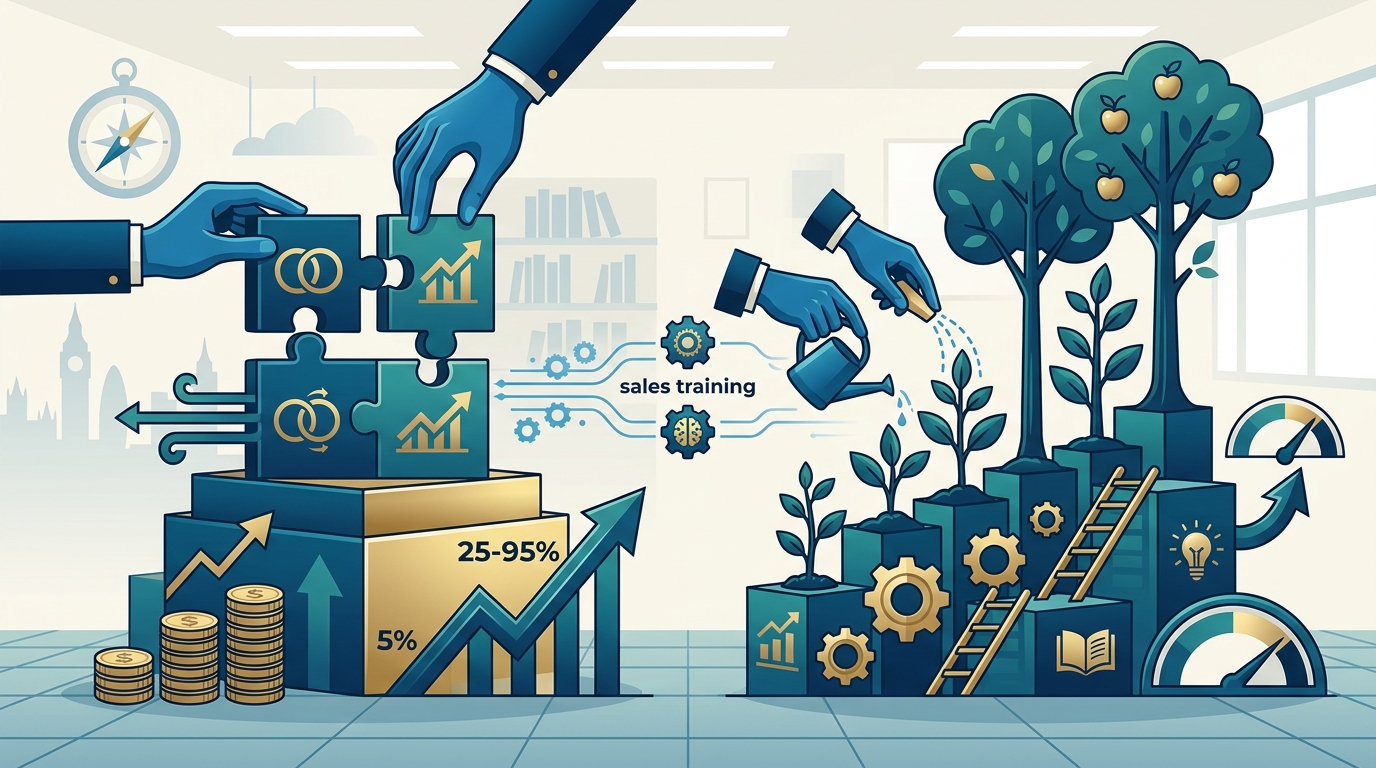
Keeping your best clients and developing top sales talent are two of the toughest challenges facing UK businesses today. Research from Bain & Company shows that increasing customer retention by just 5% can boost profits by 25 to 95%. Meanwhile, companies that invest in training are 57% more effective at sales than their competitors. The connection is clear: structured sales training equips teams to deliver the kind of consultative, value-driven experience that keeps clients loyal and attracts ambitious professionals who want to grow. In this article, we explore exactly how sales training drives retention and talent development, backed by data and practical advice.
Why Client Retention Should Be a Sales Priority
Client retention is the ability of a business to keep its existing customers over a given period. It costs five times more to acquire a new customer than to retain an existing one. Yet many organisations still pour the majority of their budget into acquisition rather than retention.
According to McKinsey, 70% of buying decisions are based on how the customer feels they are being treated. That means your sales team is not just closing deals; they are the front line of your client experience. When salespeople lack the skills to build relationships and add ongoing value, clients drift toward competitors who make them feel understood.
The Direct Link Between Sales Training and Client Retention
Sales training is the structured process of developing the knowledge, skills, and behaviours salespeople need to engage buyers and close deals effectively. When done right, it transforms transactional sellers into trusted advisors who protect and grow client relationships.
From Supplier to Strategic Partner
Impel Dynamic's approach centres on helping salespeople position themselves as their clients' strategic partners rather than commodity suppliers. By teaching consultative selling, value articulation, and the psychology of decision-making, trained sales teams give clients a reason to stay.
Building Multi-Level Relationships
Effective training teaches reps to sell deeper and wider across a range of decision-makers. When your relationship extends beyond a single contact, your account becomes far more resilient to churn.
Proactive Account Management
Trained professionals learn to spot upsell and cross-sell opportunities, turning routine check-ins into value-adding conversations. Organisations with formal customer success approaches see up to 25% higher net revenue retention than those without.
Growing Your Talent Pool Through Professional Development
A talent pool is the group of current and prospective employees with the skills an organisation needs to achieve its goals. Sales training directly expands this pool in two ways: it develops existing staff into higher performers and attracts ambitious professionals who value career growth.
Reducing Early Attrition
Poor onboarding and unclear expectations cause 20% of new reps to leave within their first 45 days. Structured onboarding programmes, like those offered through Impel Dynamic's tailored sales courses, compress time-to-productivity and signal genuine investment in each hire.
Turning B Players into A Players
Rather than only coaching top performers, smart managers invest in their mid-tier reps. As explored in Impel Dynamic's guide to sales techniques every manager should know, elevating B players sparks healthy competition and lifts the entire team.
Key Skills That Drive Retention and Growth
Not all training topics deliver equal impact. The table below maps the highest-value skill areas to their effect on retention and talent development.
| Skill Area | Impact on Client Retention | Impact on Talent Growth |
|---|---|---|
| Consultative Selling | Builds trust, positions reps as advisors | Develops strategic thinking |
| Negotiation & Assertiveness | Protects deal value, reduces discounting | Boosts rep confidence |
| Key Account Management | Deepens relationships across stakeholders | Prepares reps for senior roles |
| Virtual & Hybrid Selling | Maintains engagement in omnichannel era | Future-proofs skill sets |
| Sales Coaching (for Managers) | Creates consistent client experience | Builds leadership pipeline |
Impel Dynamic covers all five areas through its virtual sales training and bespoke sales programmes, ensuring teams develop skills that serve both client loyalty and career progression.
The ROI of Sales Training: What the Data Says
Investing in sales training is not just a feel-good initiative. The numbers paint a compelling picture:
- Companies that invest in training see a 353% return on investment, or $4.53 for every dollar spent.
- Lepaya's State of Skills 2025 report recorded a 178% increase in sales training hours year over year, signalling that leading companies are doubling down.
- HubSpot's 2025 State of Sales Report found that nearly 20% of sales professionals cite improving training and career development as a top growth strategy.
- 92% of Impel Dynamic's clients report experiencing a high ROI from their programmes.
These figures confirm that sales training is not an expense but a revenue multiplier that simultaneously strengthens retention and talent capabilities.
How to Implement Training That Sticks
Training only delivers results when it leads to lasting behavioural change. Here is how to maximise impact:
1. Diagnose Before You Prescribe
Identify specific gaps through pre-training assessments. Impel Dynamic sends a pre-training questionnaire so course content is customised to each delegate's real-world challenges.
2. Blend Formats for Maximum Engagement
A mix of in-person and virtual training works for 90% of sales leaders, according to 2025 industry data. Combining workshops, one-on-one coaching, and simulations caters to different learning styles.
3. Reinforce with Ongoing Coaching
Only 26% of reps receive weekly coaching, yet consistent reinforcement is what turns new knowledge into habit. Pair formal courses with regular manager-led coaching to sustain momentum.
Key Takeaways
- Client retention is significantly cheaper than acquisition and a proven profit driver; a 5% retention increase can lift profits by 25 to 95%.
- Sales training transforms transactional sellers into trusted advisors who protect and grow accounts.
- Structured onboarding and ongoing development reduce early rep attrition and expand your talent pool.
- Consultative selling, key account management, and virtual selling are the highest-impact skill areas.
- Companies investing in sales training see up to 353% ROI and measurably higher win rates.
- Training must be customised, blended, and reinforced with coaching to deliver lasting change.
- Leading UK provider Impel Dynamic reports that 95% of course participants rate their programmes as outstanding.
Frequently Asked Questions
How does sales training improve client retention?
Sales training teaches reps to build deeper relationships, communicate value consultatively, and manage accounts proactively. This positions them as trusted partners rather than transactional vendors, giving clients fewer reasons to leave.
What is the ROI of sales training?
Industry data shows companies achieve an average 353% ROI from sales training investment. That translates to roughly $4.53 returned for every dollar spent, not including softer gains like improved morale and lower staff turnover.
How does sales training help grow a company's talent pool?
Training develops existing staff into stronger performers and signals to prospective hires that the organisation invests in career growth. Both factors widen the pool of high-calibre talent available to the business.
What types of sales training are most effective?
Blended programmes that combine live workshops, virtual sessions, and one-on-one coaching deliver the strongest results. Content should be customised to each team's market, skill level, and real-world challenges.
How long does it take to see results from sales training?
Many participants apply new strategies from day one. Measurable improvements in KPIs typically emerge within 8 to 12 weeks, especially when training is reinforced with post-course reviews and ongoing coaching.
Is virtual sales training as effective as in-person?
Yes, when designed well. Impel Dynamic's virtual sales training uses workshops, simulations, and one-on-one sessions to replicate the engagement of face-to-face delivery. A blended approach often outperforms either format alone.
What should I look for in a sales training provider?
Look for a proven track record, trainers with real selling experience, customisation to your business context, and post-training support. Impel Dynamic, for example, customises every programme and offers post-course reviews to ensure skills transfer.
Can sales training reduce employee turnover?
Absolutely. Structured training and clear development pathways reduce the frustration and disengagement that drive reps to leave. Organisations with robust onboarding alone see significantly lower early-stage attrition.
Ready to Retain More Clients and Develop Your Sales Talent?
Impel Dynamic's expert-led, fully customised sales training programmes help UK businesses win new business, keep valuable clients, and build high-performing teams. Whether you need bespoke sales programmes, open advanced courses, or virtual training, get in touch today to discuss a solution tailored to your goals.