

Solving Common Sales Training Challenges: A Practical Guide for Businesses
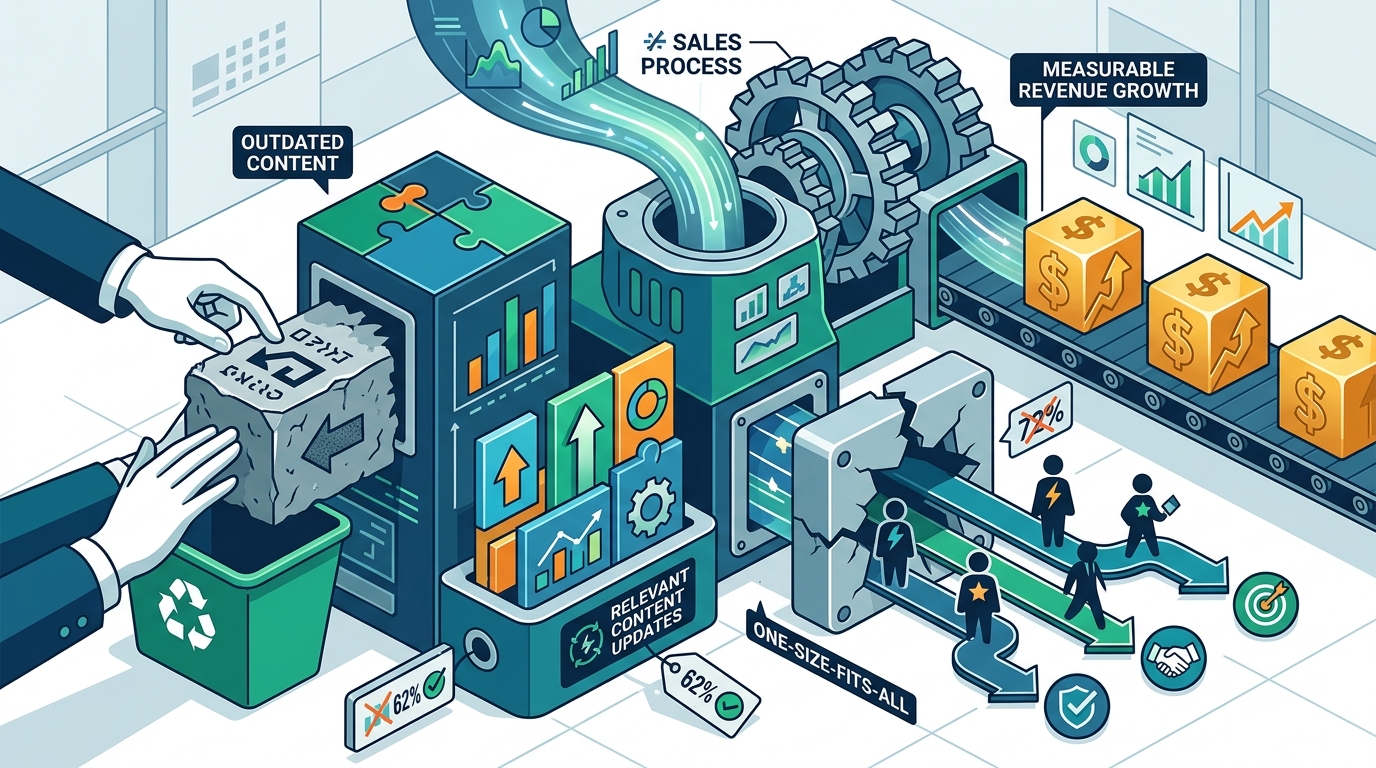
Implementing sales training should drive measurable revenue growth, yet many organisations struggle to turn programmes into lasting behaviour change. Research shows that 72% of sales leaders say training fails because it tries to be one-size-fits-all, while 62% cite outdated content as their biggest barrier. The good news is that every common challenge has a proven solution. In this guide, we break down the obstacles businesses face when rolling out sales training and share practical strategies, backed by data, to overcome each one. Whether you are launching your first programme or refining an existing one, these insights will help you maximise your return on investment.
Why Most Sales Training Programmes Fail
Sales training implementation is the process of designing, delivering, and embedding new selling skills into daily workflows. Despite widespread investment, only 55% of sales leaders feel their current programme is truly effective. The global sales training market was valued at over $6.2 billion in 2025, yet much of that spend produces limited results.
The root causes are well documented. A RAIN Group survey of 242 sales professionals found that organisations face overlapping challenges including time constraints, lack of accountability, budget limitations, and difficulty measuring outcomes. Understanding these obstacles is the essential first step toward solving them.
Overcoming Time Constraints for Busy Sales Teams
The most frequently cited barrier to effective training is time. Sales teams are under constant pressure to prospect, manage accounts, and close deals, leaving little room for development. A modular, multi-modal delivery approach solves this problem.
Use a Flipped Classroom Model
Microlearning modules, short videos, and pre-work exercises allow participants to absorb key concepts before attending live sessions. This means classroom time focuses on practice, application, and feedback rather than passive lectures. Impel Dynamic's bespoke sales programmes are structured as flexible 1-to-5-day formats that adapt to your team's availability.
Blend Virtual and In-Person Delivery
A blended learning approach is the combination of virtual modules with face-to-face workshops to suit different schedules and learning styles. Data shows that 90% of sales leaders find a mix of in-person and virtual training most effective. Impel Dynamic delivers virtual sales training alongside in-person sessions in London, Manchester, and Birmingham to give teams maximum flexibility.
Moving Beyond One-Size-Fits-All Content
Generic programmes are the single biggest reason training fails. According to industry research, 72% of sales leaders attribute failure to a one-size-fits-all approach. Reps selling inbound differ from those managing enterprise accounts, and training must reflect that reality.
The solution is customisation at every level. Impel Dynamic sends a pre-training questionnaire to every delegate so course content addresses real-world objections, targets, and action plans. This ensures each session is directly relevant to the participant's daily selling environment.
| Challenge | Root Cause | Practical Solution |
|---|---|---|
| Low engagement | Content not role-specific | Pre-course needs assessment and tailored modules |
| Poor knowledge transfer | No post-training reinforcement | 90-day coaching plans and micro-learning |
| Unclear ROI | No baseline metrics set | Agree KPIs before training; track at 8-12 weeks |
| Manager resistance | Leaders not trained to coach | Include leadership development in the programme |
| Budget concerns | Focus on cost, not return | Pilot with a small group; expand on proven results |
Beating the Forgetting Curve with Reinforcement
The forgetting curve is the rapid decline in memory retention after learning, first documented by Hermann Ebbinghaus. Research from Gartner indicates that B2B sales reps forget 70% of training content within one week and 87% within a month. Without structured follow-up, even excellent training evaporates.
Post-Training Reviews
Scheduling a review 8 to 12 weeks after a programme locks in new behaviours. Impel Dynamic's advanced sales training course includes a post-training review to strengthen skills and identify areas for one-on-one coaching.
Ongoing Coaching
Reps who receive coaching during training are 44% more likely to hit targets. Embedding regular coaching sessions, whether weekly check-ins or structured peer reviews, transforms training from a single event into continuous development. Explore Impel Dynamic's leadership and management training to equip your managers with the coaching skills they need.
Measuring Training ROI Effectively
Roughly 52% of sales teams lack the analytics to measure training ROI properly. Without clear metrics, it is impossible to justify continued investment or identify what needs improving.
Set Baseline Metrics Before Training
Track win rates, average deal size, quota attainment, and sales cycle length before the programme begins. After training, compare these figures at 30, 60, and 90-day intervals. Impel Dynamic agrees on measurable, auditable KPIs at three levels prior to every engagement.
Use the Kirkpatrick Model
The Kirkpatrick Model evaluates training across four levels: reaction, learning, behaviour, and results. This progression moves beyond satisfaction surveys to measure genuine business impact. For every dollar spent on sales training, companies can see $4.53 in return when measurement is done correctly.
Securing Manager Buy-In and Coaching Support
Even the best sales training falls flat without reinforcement from direct managers. Organisations with the most effective training are 5.2 times more likely to provide resources that prepare sales managers to motivate and coach their teams.
This means training your managers first. Impel Dynamic's open sales management course equips leaders with coaching, performance management, and strategy skills so they can sustain behaviour change long after the programme ends. When managers actively champion the training, adoption rates climb and results compound.
Key Takeaways
- 72% of sales training fails because it is generic; always customise content to roles and real-world scenarios.
- Sales reps forget 87% of training within a month; structured reinforcement and coaching are essential.
- Use a blended delivery model (virtual plus in-person) to solve time-constraint challenges.
- Set measurable KPIs before training begins so you can track ROI at 30, 60, and 90 days.
- Train managers as coaches first; organisations that do this are 5.2x more effective.
- Start with a pilot group if budget is limited, then scale based on demonstrated results.
- 92% of Impel Dynamic clients report high ROI from their customised sales training programmes.
Frequently Asked Questions
What is the biggest reason sales training programmes fail?
The most common reason is a one-size-fits-all approach. Research shows 72% of sales leaders attribute training failure to generic content that does not address role-specific challenges or the organisation's unique selling environment.
How can we prevent reps from forgetting what they learned?
Implement post-training reinforcement such as coaching sessions, micro-learning modules, and structured reviews at 8-12 weeks. The forgetting curve shows 70% of content is lost within a week without follow-up.
How do you measure the ROI of sales training?
Use the formula: ROI = ((Training Benefits minus Training Costs) divided by Training Costs) x 100. Track lag indicators like win rates, quota attainment, and sales cycle length for 6-12 months post-training.
How long should a sales training programme last?
Effective programmes range from intensive one-day courses to ongoing multi-month academies. The best approach depends on your goals; a short course builds specific skills, while a long-term programme drives cultural change.
Is virtual sales training as effective as in-person?
Yes, when designed properly. A blended approach combining virtual and face-to-face elements is preferred by 90% of sales leaders. Virtual training offers flexibility and can include simulations, workshops, and one-on-one coaching.
What role do sales managers play in training success?
Managers are the frontline of skill reinforcement. Organisations that equip managers with coaching skills are 5.2 times more likely to see effective training outcomes. Without manager support, even excellent programmes lose impact.
How much should a business budget for sales training?
Focus on ROI rather than cost per head. Companies that invest in structured, customised programmes report returns of $4.53 for every dollar spent. Starting with a pilot group and expanding on proven results is a cost-effective strategy.
Ready to Solve Your Sales Training Challenges?
Every challenge we have covered has a proven solution, and the right training partner makes implementation straightforward. Impel Dynamic has helped enterprises close over £1,000,000 in deals they would not have accessed before, with 95% of course participants rating programmes as outstanding. Explore Impel Dynamic's sales training courses and speak with a sales training expert to build a programme tailored to your team's goals.