

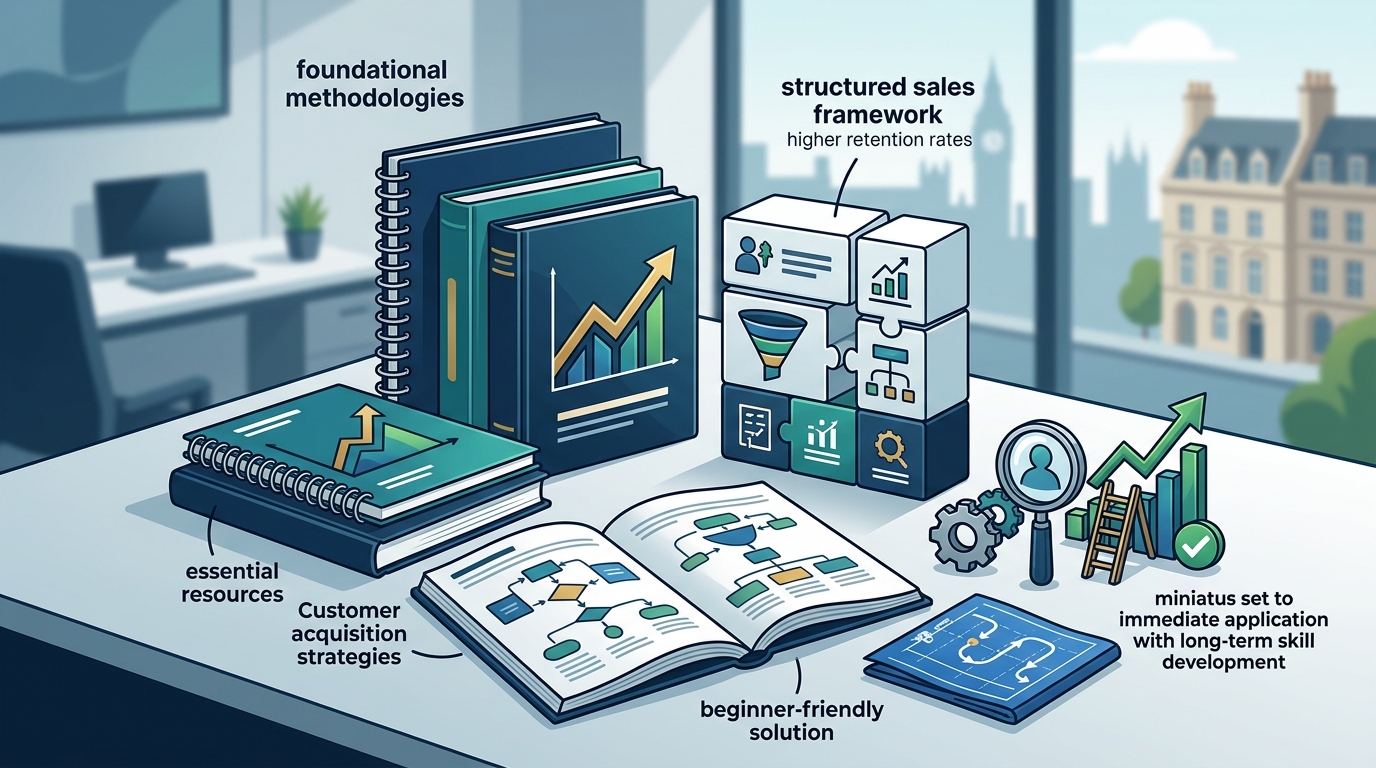
Sales training resources for new businesses often focus on foundational methodologies that establish consistent revenue streams. Organizations adopting structured sales frameworks report higher retention rates compared to ad-hoc approaches. This guide outlines essential resources to help teams build competence quickly. Businesses seeking beginner-friendly solutions benefit from scalable programmes that integrate immediate application with long-term skill development. Understanding the core components of effective sales education allows leaders to select resources that align with their operational goals and team maturity.
Understanding Beginner Sales Training Fundamentals
Sales training is a structured educational process designed to equip teams with the skills, tools, and methodologies required to close deals effectively. New businesses often struggle with inconsistent results due to a lack of standardized processes. Implementing a comprehensive sales training programme addresses these gaps by establishing clear expectations and actionable strategies. Beginner-friendly resources prioritize practical application over theoretical concepts, ensuring teams can generate value from day one. This approach reduces the learning curve and accelerates time-to-competence for new hires.
Sales onboarding programs serve as the foundation for long-term success. These resources focus on core competencies such as prospecting, objection handling, and closing techniques. By integrating these elements into a cohesive curriculum, companies can build a sales culture that drives sustainable growth. Leaders should evaluate resources based on their ability to deliver impact immediately while supporting future scalability. A well-designed onboarding process ensures that every team member understands their role in the broader business strategy.
Evaluating Open Course Options for Rapid Skill Acquisition
Open courses provide accessible entry points for teams looking to upskill without the commitment of a full bespoke engagement. These programmes typically cover essential topics like sales fundamentals, telesales techniques, and LinkedIn prospecting. Businesses can enroll teams in targeted sessions to address specific skill gaps quickly. This model offers flexibility and allows organizations to test training effectiveness before scaling to larger initiatives. Open courses are particularly valuable for small teams that need immediate results without extensive overhead.
When exploring open course options, consider the depth of content and the expertise of the instructors. High-quality resources include real-world scenarios and interactive exercises that reinforce learning. Teams benefit from peer interaction and the ability to ask questions in a collaborative environment. This format is particularly effective for small to mid-sized businesses seeking cost-efficient solutions. Many providers offer modular content that can be customized to fit specific industry requirements.
Leveraging Bespoke Programmes for Customized Growth
Bespoke sales programmes offer a tailored approach that aligns training with your unique selling environment and business objectives. Unlike off-the-shelf solutions, these resources are designed to meet your team where they are and take them to the top. This method ensures that every module addresses your specific challenges, market conditions, and customer personas. Organizations can access 1-5 day tailored programmes or ongoing support structures to maintain momentum. Customized training maximizes return on investment by focusing on high-impact areas.
A tailored sales programme often includes diagnostic assessments to identify knowledge gaps before delivery. This data-driven approach ensures that resources are allocated efficiently and that training outcomes directly correlate with business goals. Companies seeking maximum impact should prioritize bespoke solutions that offer ongoing coaching and academy support. These programmes adapt to your evolving needs, ensuring that your sales team remains competitive in a dynamic market.
Integrating Leadership Coaching with Sales Methodology
Leadership coaching plays a critical role in standardizing sales methodology across a growing organization. Managers require specific skills to support their teams, reinforce training concepts, and drive performance. Resources that combine sales training with leadership development ensure that management teams can effectively coach their staff. This dual focus creates a multiplier effect, where improved leadership directly translates to better sales outcomes. Investing in leadership development resources builds a pipeline of capable managers who sustain sales excellence.
Effective leadership training covers topics such as performance management, feedback delivery, and strategic planning. By integrating these elements, businesses can ensure that management teams can standardize sales methodology and provide effective feedback. This integration is essential for companies scaling their operations and expanding their market presence. Leaders who understand sales dynamics can make better hiring decisions and allocate resources more effectively. A strong leadership foundation supports long-term growth and resilience.
Comparing Virtual and In-House Delivery Models
The delivery model of your sales training resource significantly impacts engagement and knowledge retention. Virtual training offers flexibility and accessibility, allowing teams to learn from any location. In-house training provides a focused environment free from distractions, fostering deeper collaboration. Businesses should assess their team's preferences and logistical constraints when selecting a delivery format. Hybrid approaches often yield the best results by combining the convenience of virtual sessions with the intensity of in-person workshops.
This strategy allows organizations to maintain consistency while accommodating remote team members. Resources that support multiple delivery modes demonstrate adaptability and commitment to client success. Choosing the right model ensures that training aligns with your operational workflow and maximizes participation. Additionally, integrating business development resources with your training delivery can enhance pipeline generation and relationship building. A holistic approach to sales enablement ensures that training translates into measurable business outcomes.
Comparison of Sales Training Resources
| Resource Type | Best For | Key Benefits | Implementation |
|---|---|---|---|
| Open Courses | Targeted skill gaps | Cost-effective, flexible | Book a call for scheduling |
| Bespoke Programmes | Customized growth | Tailored to environment, high ROI | Explore bespoke options |
| Leadership Coaching | Management standardization | Multiplies team impact | View leadership resources |
| Virtual Training | Remote teams | Accessible, scalable | Contact for details |
| Other Core Services | Performance management | Technology integration, data support | Explore core services |
Key Takeaways for Selecting the Right Resource
- Beginner-friendly resources prioritize practical application and immediate results over theoretical concepts.
- Open courses offer cost-effective solutions for addressing specific skill gaps quickly.
- Bespoke programmes provide customized training that aligns with your unique business environment.
- Integrating leadership coaching ensures managers can effectively support and standardize sales methodology.
- Delivery models should match your team's preferences and logistical requirements.
- Scalable sales processes are essential for businesses planning to grow their revenue streams.
- Evaluating resources based on ROI and client satisfaction helps ensure long-term success.
Frequently Asked Questions
What defines a beginner-friendly sales training resource?
A beginner-friendly sales training resource is a structured educational tool designed to teach foundational sales skills to teams with limited prior experience. These resources focus on practical application, clear methodologies, and immediate results. They avoid overly complex jargon and provide actionable steps that teams can implement from day one.
How can new businesses evaluate sales training providers?
New businesses should evaluate sales training providers by examining their track record, client satisfaction rates, and ability to deliver customized solutions. Look for providers that offer diagnostic assessments and measure outcomes against specific business goals. A reliable partner will demonstrate a clear framework for delivering impact and supporting long-term growth.
Is it better to choose open courses or bespoke programmes?
The choice between open courses and bespoke programmes depends on your specific needs and budget. Open courses are ideal for addressing targeted skill gaps quickly and cost-effectively. Bespoke programmes are better suited for organizations seeking customized solutions that align with their unique selling environment and long-term strategic objectives.
How does leadership coaching enhance sales training outcomes?
Leadership coaching enhances sales training outcomes by equipping managers with the skills to reinforce training concepts and drive team performance. This resource ensures that management teams can standardize sales methodology and provide effective feedback. It creates a multiplier effect where improved leadership directly translates to better sales results across the organization.
What role does sales onboarding play in beginner training?
Sales onboarding is the initial phase of integrating new hires into your sales process and culture. Effective onboarding resources provide clear expectations, essential tools, and structured learning paths. This process reduces time-to-competence and helps new team members contribute to revenue generation more quickly.
Can virtual training be as effective as in-person sessions?
Virtual training can be as effective as in-person sessions when designed with high engagement and interactive elements. Modern resources leverage digital tools to facilitate collaboration, practice, and feedback. This model offers flexibility and accessibility, making it suitable for remote teams and distributed organizations.
How do I measure the success of a sales training programme?
You can measure the success of a sales training programme by tracking key performance indicators such as conversion rates, deal size, and sales cycle length. Providers should offer metrics and reporting to demonstrate ROI. Regular feedback loops and performance reviews help identify areas for improvement and ensure continuous development.
What are the benefits of a sales training academy?
A sales training academy is a dedicated resource that provides ongoing education and development for your sales team. This model supports continuous learning, skill reinforcement, and career progression. It ensures that your team stays current with market trends and maintains high performance standards over time.
Next Steps for Your Sales Team
Investing in the right sales training resources can transform your team's performance and drive sustainable growth. Whether you choose open courses, bespoke programmes, or leadership coaching, the key is to select solutions that align with your business goals. Our team is ready to help you design a scalable sales process that delivers results. Contact us today to discuss your needs and book a consultation. Let us show you how to build a sales team that gets results.