

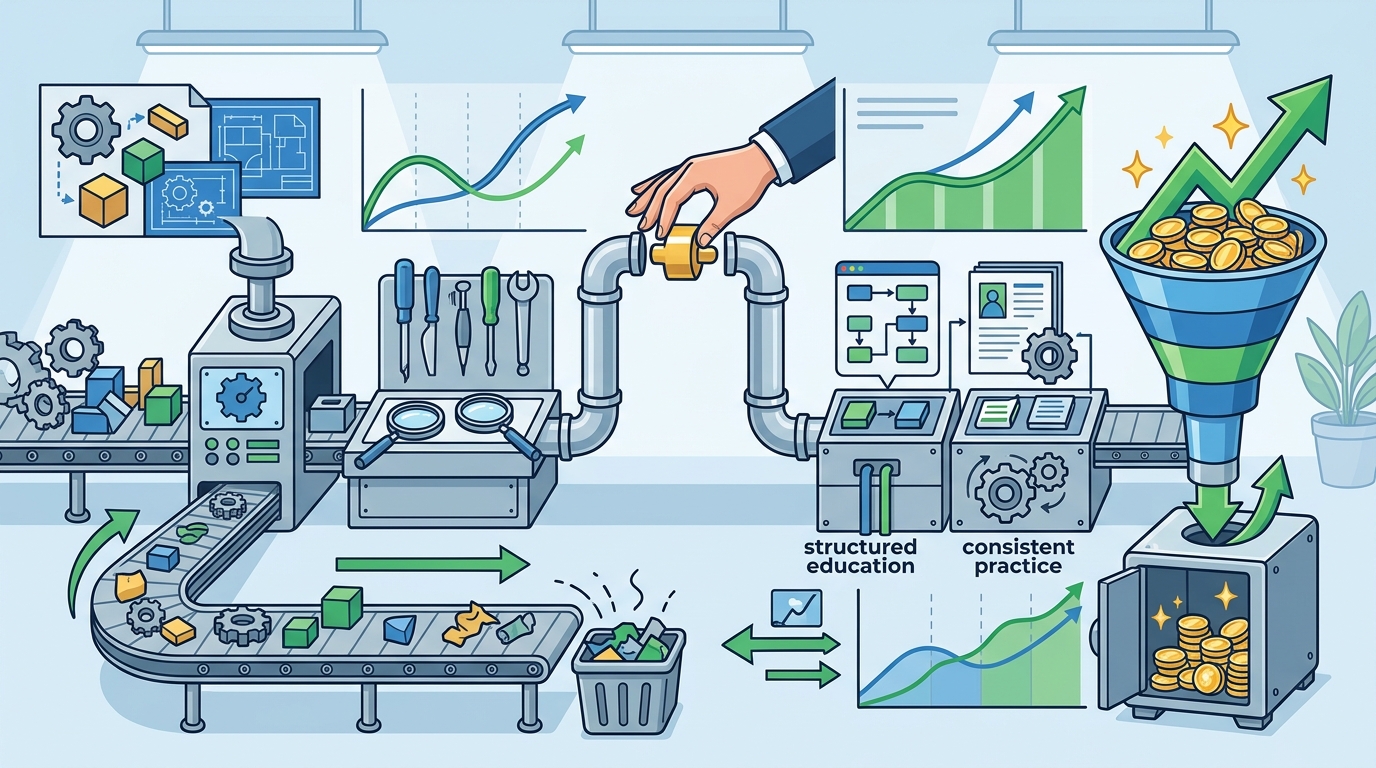
Establishing a functional sales pipeline requires structured education and consistent practice. According to the Small Business Administration, companies that implement formal sales training programs experience an average revenue growth of 24 percent within the first twenty-four months. New enterprises often struggle with unstructured outreach methods that waste valuable capital. Organizations must prioritize foundational frameworks that align with their specific market conditions. This guide outlines essential beginner sales training resources and practical pathways for sustainable commercial growth.
Understanding Fundamental Sales Training
Organizations must establish clear commercial objectives before selecting educational materials. Sales training is the systematic process of equipping teams with proven methodologies, communication frameworks, and negotiation tactics. New businesses frequently overlook the importance of structured onboarding. They often rely on trial and error, which drains operational budgets. The Harvard Business Review emphasizes that structured educational frameworks reduce customer acquisition costs by nearly thirty percent. Companies should evaluate their current pipeline maturity before investing in advanced modules. Foundational programs focus on prospecting, active listening, and closing techniques. These core competencies form the backbone of sustainable revenue generation. Teams that master these basics consistently outperform untrained counterparts in competitive markets.
Open Course Options for New Teams
Publicly available educational modules provide accessible entry points for emerging commercial teams. Organizations can enroll multiple staff members in standardized curricula without custom development delays. The Society for Human Resource Management notes that standardized classroom environments accelerate skill transfer by forty percent. These programs typically cover prospecting strategies, objection handling, and pipeline management. Open courses deliver immediate value through structured workshops. Participants learn standardized frameworks that apply across diverse industries. Many providers offer modular pricing that scales with team size. Businesses can start with foundational sales course modules before advancing to complex negotiation tactics. This progressive approach minimizes cognitive overload while maximizing practical application. Teams typically report higher confidence levels after completing standardized open course curricula.
Bespoke Programming for Scaling Organizations
Customized educational frameworks address unique market conditions and specific product ecosystems. Bespoke sales programming is the development of highly customized educational curricula designed around specific organizational workflows and target demographics. Standardized modules often fail to address niche regulatory requirements or complex enterprise sales cycles. Consulting firms conduct deep diagnostic assessments to map existing commercial workflows. They then construct multi-day workshops that simulate real-world client interactions. Bespoke sales programmes integrate directly with existing customer relationship management systems. Organizations report an average return on investment of six times the initial training expenditure. These programs typically span one to five days of intensive instruction. They include role-playing scenarios, live deal reviews, and continuous coaching cycles. Companies that invest in tailored frameworks consistently achieve higher conversion rates. The Forbes Business Council highlights that customized educational frameworks align directly with long-term revenue targets.
Digital and Virtual Learning Platforms
Remote educational delivery models eliminate geographical barriers and reduce logistical overhead. Modern sales teams operate across distributed locations and require flexible scheduling options. Virtual training modules replicate classroom interactions through interactive digital environments. Participants engage in live role-playing, screen-sharing demonstrations, and real-time feedback loops. Virtual training platforms maintain high engagement levels without requiring physical travel. Organizations save significant budget allocations on venue rentals and employee downtime. These digital frameworks often include recorded session archives for future reference. Managers can track individual progress through integrated analytics dashboards. The Small Business Administration confirms that remote learning models increase knowledge retention by twenty-two percent. Distributed teams benefit from asynchronous review materials and on-demand coaching sessions. This flexibility ensures consistent skill development across all time zones.
Comparing Training Delivery Methods
Organizations must evaluate delivery formats against specific operational constraints and budget allocations. Each educational model presents distinct advantages regarding cost, customization, and scalability. The following matrix outlines the core differences between standard delivery frameworks.
| Delivery Method | Customization Level | Typical Duration | Best Use Case |
|---|---|---|---|
| Open Classroom Courses | Standardized Framework | One to Two Days | Teams requiring immediate foundational skills |
| Bespoke Programmes | Highly Tailored | One to Five Days | Complex enterprise sales environments |
| Virtual Training | Flexible Configuration | Modular Sessions | Distributed teams with remote workflows |
| In-House Training | On-Site Integration | Custom Schedule | Organizations prioritizing direct cultural alignment |
Key Takeaways for Implementation
- Formal sales training programs increase average revenue growth by twenty-four percent within the first twenty-four months.
- Open classroom courses provide standardized frameworks that accelerate skill transfer by forty percent.
- Bespoke programmes deliver an average return on investment of six times the initial expenditure.
- Virtual training models increase knowledge retention by twenty-two percent across distributed teams.
- Leadership coaching frameworks reinforce managerial oversight and improve deal conversion rates.
- Business development integration ensures continuous market relevance and pipeline stability.
- Organizations report ninety-nine percent client satisfaction when implementing structured educational pathways.
Frequently Asked Questions
What defines beginner sales training for new businesses?
Beginner sales training establishes foundational prospecting, communication, and closing methodologies. These programs focus on building core competencies without overwhelming participants with advanced enterprise tactics. New teams typically start with standardized open course modules before advancing to customized frameworks.
How much does comprehensive sales education typically cost?
Investment varies based on delivery format, team size, and customization requirements. Open classroom courses generally offer the most accessible pricing structures for emerging organizations. Bespoke programmes require higher initial capital but deliver significantly higher long-term returns.
Can remote teams effectively utilize virtual sales training?
Remote teams consistently achieve superior knowledge retention through virtual training platforms. These digital environments replicate classroom interactions while eliminating geographical barriers. Managers can track individual progress through integrated analytics dashboards.
What is the difference between open courses and bespoke programmes?
Open courses deliver standardized frameworks applicable across multiple industries. Bespoke programmes undergo deep diagnostic assessments to address specific organizational workflows. Companies choose bespoke frameworks when dealing with complex enterprise sales cycles.
How long does it take to see measurable results from sales education?
Organizations typically observe improved conversion rates within the first ninety days. Consistent coaching cycles and real-world application accelerate pipeline growth. Leadership frameworks ensure that managers reinforce learned methodologies daily.
Should businesses invest in leadership coaching alongside sales training?
Leadership coaching frameworks significantly improve managerial oversight and team performance. Managers who receive dedicated training can effectively coach representatives through complex sales cycles. This dual approach maximizes overall organizational revenue generation.
Next Steps for Your Organization
Establishing a high-performing sales pipeline requires structured education and consistent practice. Organizations that prioritize foundational frameworks consistently outperform untrained counterparts. You can explore our comprehensive educational pathways by visiting our main portal. Visit our homepage to review available modules and scheduling options. Our team provides personalized consultations to match your specific commercial objectives. Contact our advisory team to schedule a diagnostic assessment. We will map your current pipeline maturity and recommend the optimal training delivery method. Begin building a sales team that generates measurable results today.