

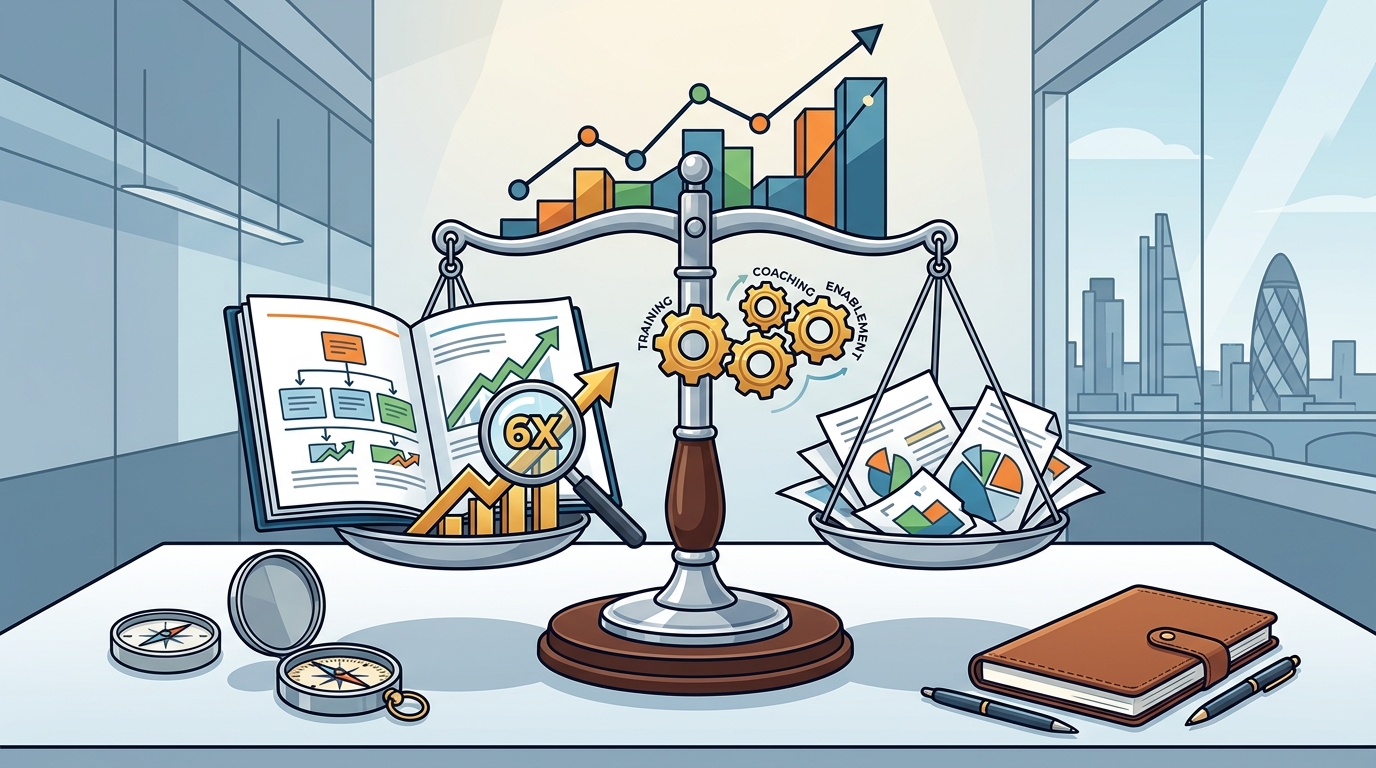
Sales excellence is not given. It is developed. According to recent industry benchmarks, organizations that invest in structured sales enablement see an average ROI of 6X compared to those relying on ad-hoc coaching. This statistic highlights a critical reality: without a tailored framework, even the most talented sales teams struggle to scale. The challenge for directors and HR leaders is not finding training, but identifying a solution that delivers immediate impact from day one. This guide outlines the precise methodology for evaluating and selecting a sales training partner that aligns with your specific operational goals.
Step 1: Define Your Current Sales Maturity
Before engaging with any vendor, you must conduct an internal audit of your sales infrastructure. Sales training is the systematic process of equipping teams with the skills, tools, and knowledge to sell more effectively. Without this clarity, you risk purchasing generic content that fails to address your specific bottlenecks.
Ask yourself these diagnostic questions:
- Is the primary gap in technical product knowledge or soft skills like negotiation?
- Are you struggling with lead generation or closing existing opportunities?
- Does your team require standardized methodology or adaptive selling techniques?
Understanding these nuances allows you to filter vendors who offer tailored leadership and management training versus those offering only one-size-fits-all modules. Impel Dynamic, for instance, emphasizes meeting teams at their current knowledge level to take them to the top, ensuring no time is wasted on irrelevant content.
Step 2: Key Evaluation Criteria for Vendors
Not all training providers are created equal. When evaluating potential partners, focus on these four non-negotiable criteria:
1. Proven Methodology
Look for vendors who cite specific, measurable outcomes. A reputable provider should be able to demonstrate a proven method for accelerating sales growth. For example, Impel Dynamic reports a 99% client satisfaction rate and an average 6X ROI for their clients. These metrics are not just marketing fluff; they indicate a rigorous, results-oriented approach.
2. Industry Relevance
General sales principles apply across sectors, but the nuances of B2B vs. B2C, or SaaS vs. Manufacturing, require specialized context. Ensure the vendor has experience in your specific vertical. Their ability to speak your language and understand your customer journey is paramount.
3. Scalability
Your training solution must grow with you. Can the program handle a team of 10 and scale to 100 without losing quality? Look for frameworks that support both individual development and organizational standardization.
4. Post-Training Support
Training does not end when the workshop does. The best solutions include ongoing coaching, refresher courses, and performance monitoring. This continuous loop ensures that new skills are retained and applied in real-world scenarios.
Step 3: Choosing the Right Delivery Model
The format of your training significantly impacts engagement and retention. You generally have three primary options:
In-House Training
This model involves bringing experts directly to your office. It allows for deep customization and immediate application of concepts to your specific products and clients. It is ideal for teams that need to align on a unified sales methodology quickly.
Virtual Training
For distributed teams, virtual training offers flexibility and cost-efficiency. However, it requires a vendor with exceptional digital engagement techniques to prevent participant fatigue. Ensure the platform supports interactive role-plays and real-time feedback.
Open Courses
These are pre-scheduled sessions open to the public. They are cost-effective for individual development but lack the contextual relevance of in-house or bespoke programs. They are best suited for upskilling specific individuals rather than transforming a team.
For a detailed comparison of these models, refer to our analysis of leadership training options available in the market.
Step 4: Bespoke Programmes vs. Open Courses
One of the most critical decisions you will make is whether to invest in a bespoke programme or an open course. Bespoke sales training is a customized educational framework designed to address the unique challenges and goals of a specific organization.
While open courses are accessible, they often fail to address the specific pain points of your sales cycle. A bespoke programme, such as those offered by Impel Dynamic, is built around your current knowledge level and takes your team to the top through 1-5-day tailored programmes or ongoing sales academies. This approach ensures that every minute of training is directly applicable to your revenue goals.
Comparison of Training Approaches
| Feature | Bespoke Programme | Open Course | Virtual Training |
|---|---|---|---|
| Customization Level | High (Tailored to your needs) | Low (Standardized content) | Medium (Adaptable but remote) |
| Implementation Speed | Immediate application | Delayed (Requires self-study) | Fast (Remote access) |
| Team Alignment | High (Unified methodology) | Low (Individual focus) | Medium (Depends on facilitation) |
| ROI Potential | High (6X average reported) | Variable | Medium |
Step 5: Measuring Training ROI
Justifying the investment in sales training requires clear metrics. You must move beyond "happy sheets" (post-training satisfaction surveys) to hard business data. Key performance indicators (KPIs) to track include:
- Win Rate: Did the training improve the percentage of deals closed?
- Sales Cycle Length: Did deals close faster due to improved negotiation skills?
- Deal Size: Did the team learn to maximize value and upsell effectively?
- Quota Attainment: What percentage of the team hit their targets post-training?
According to data from Impel Dynamic, clients who engage in their tailored programmes often see significant improvements in these areas within the first quarter. Establishing these baselines before training begins allows you to quantify the exact impact of the intervention.
Key Takeaways
- ROI is Real: Structured sales training can deliver an average 6X return on investment.
- Customization Matters: Bespoke programmes outperform open courses in driving immediate behavioral change.
- Methodology is Key: Look for vendors with a proven, structured approach to sales acceleration.
- Scalability is Essential: Ensure your chosen solution can grow with your team size and complexity.
- Measurement Drives Success: Define KPIs before training begins to track progress accurately.
- Continuous Support: Training is a journey, not an event. Seek partners who offer ongoing coaching.
- Industry Fit: Choose a provider with experience in your specific business vertical.
Frequently Asked Questions
How long does it take to see results from sales training?
While some immediate improvements in confidence and knowledge can be seen, measurable business results typically emerge within 3 to 6 months. This timeline allows for the application of new skills in real-world scenarios and the adjustment of strategies based on feedback.
What is the difference between sales coaching and sales training?
Sales training is the initial process of teaching skills and knowledge, while sales coaching is the ongoing, personalized guidance to refine those skills. Training provides the foundation, while coaching ensures long-term retention and adaptation to market changes.
Can virtual training be as effective as in-person training?
Yes, virtual training can be equally effective if facilitated by experts who specialize in digital engagement. The key is interactive content, real-time feedback, and structured follow-up. However, for deep cultural alignment, in-person sessions may have an edge.
How do I choose between a bespoke programme and an open course?
Choose a bespoke programme if you need to address specific team gaps or align on a new methodology. Choose an open course if you are looking for individual upskilling on general topics. For organizational transformation, bespoke is almost always the superior choice.
What metrics should I use to evaluate a training provider?
Evaluate providers based on client satisfaction rates, reported ROI, industry experience, and the robustness of their post-training support. Ask for case studies that demonstrate tangible business outcomes for similar companies.
Is sales training a one-time investment?
No. The sales landscape evolves rapidly. Continuous learning through ongoing programmes, refresher courses, and leadership coaching is necessary to maintain high performance levels.
How does Impel Dynamic approach sales training?
Impel Dynamic focuses on tailored frameworks that meet teams where they are. They offer 1-5-day bespoke programmes, ongoing sales academies, and tailored leadership training designed to deliver impact from day one.
Next Steps
Ready to accelerate your sales growth? Don't let unstructured growth lead to chaos. Book a call with Impel Dynamic today to discuss your specific needs and discover how our tailored sales programmes can help you win more business and build a team that gets results.