

What Are the Key Outcomes Businesses Can Expect from Investing in Advanced Sales Training?
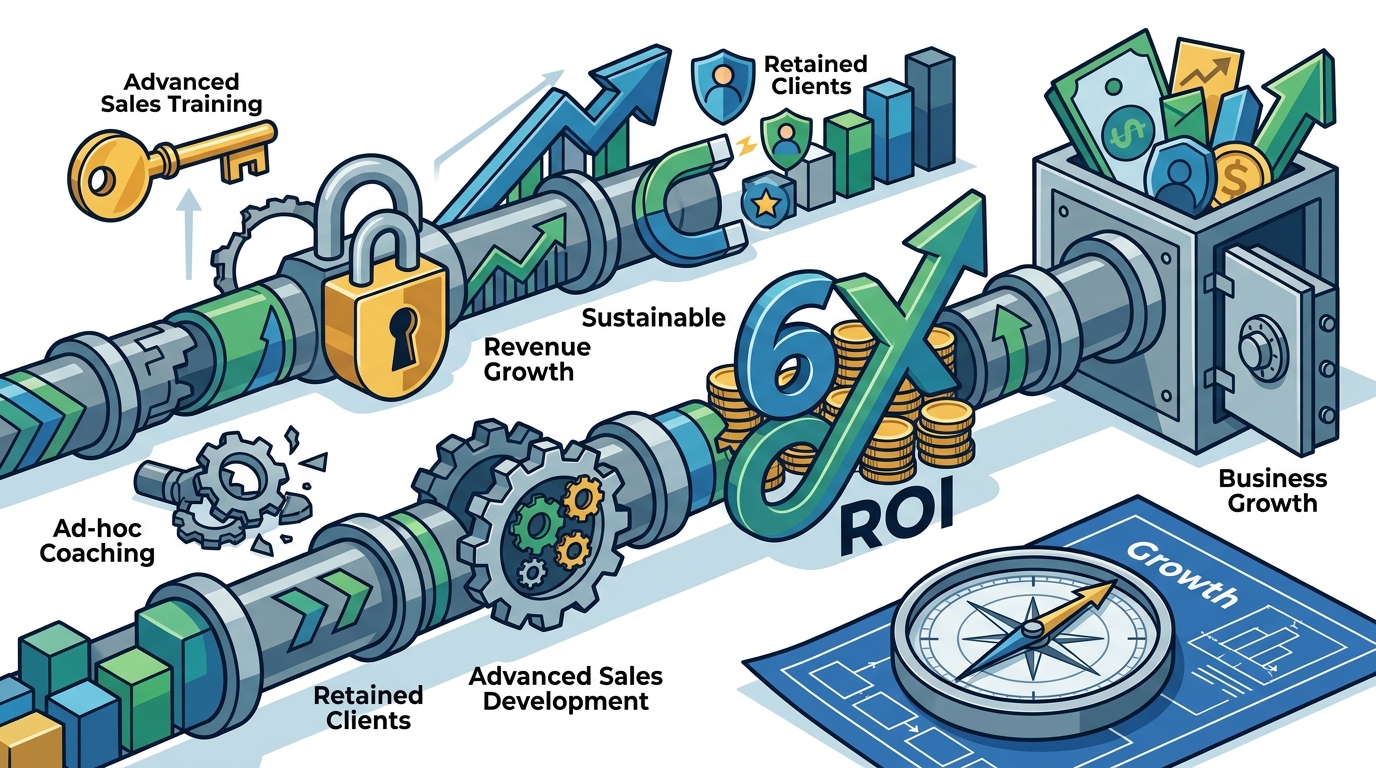
Investing in advanced sales training is no longer a discretionary expense but a critical driver of sustainable revenue growth. According to recent industry data, organizations that prioritize structured sales development see an average return on investment of 6X, significantly outperforming those that rely on ad-hoc coaching methods. This shift reflects a broader market reality where buyers are more informed and skeptical than ever, demanding a higher level of expertise from their vendors. Companies that fail to adapt their sales methodologies to these modern expectations often struggle with stagnant pipeline growth and high churn rates. By implementing a rigorous training framework, businesses can transform their sales teams from transactional order-takers into strategic advisors who consistently close high-value deals. (Other Core Services Impel)
Understanding the ROI of Advanced Sales Training
The primary outcome of any sales initiative is measurable financial impact. Advanced sales training delivers tangible results by equipping teams with the tools to maximize value out of every account. When sales professionals are trained to identify the client’s deepest challenges, they can match solutions more effectively, leading to higher conversion rates. This approach transforms the sales process from a reactive activity into a proactive revenue engine.
Businesses that invest in tailored programmes often see immediate improvements in team confidence and deal velocity. For instance, clients of specialized training providers have reported closing deals ranging from $100,000 to $1,000,000 shortly after completing intensive workshops. This is not merely about learning new scripts; it is about fundamentally changing how salespeople approach complex accounts. The result is a sales culture that is resilient, adaptable, and focused on long-term client relationships rather than short-term transactions.
Furthermore, the financial benefits extend beyond new business acquisition. Advanced training helps existing teams retain clients by delivering superior service and strategic insights. This reduces churn and increases the lifetime value of each customer. Companies that ignore this investment risk falling behind competitors who are leveraging data-driven insights and consultative selling techniques to win market share. The cost of inaction is often far greater than the cost of comprehensive training.
Adopting Strategic Selling Methodologies
One of the most significant outcomes of advanced training is the adoption of a scalable sales process. Without structure, growth is chaotic. A strategic selling plan provides a clear, step-by-step roadmap for navigating complex B2B and B2C sales cycles. This methodology ensures that every team member follows a consistent approach to qualifying leads, managing objections, and closing deals.
Strategic selling involves moving beyond price-based negotiations to value-based discussions. Sales professionals learn to articulate the unique value proposition of their products or services in a way that resonates with C-suite executives. This requires a deep understanding of the client’s business model, pain points, and strategic goals. By mastering these skills, sales teams can position themselves as trusted advisors rather than mere suppliers.
Another critical outcome is the ability to win business that was previously inaccessible. Advanced training teaches teams how to navigate complex decision-making units and influence multiple stakeholders. This is particularly important in large enterprise sales, where the buying committee may include technical, financial, and operational leaders. By understanding the dynamics of these groups, salespeople can tailor their messaging to address the specific concerns of each stakeholder, thereby increasing the likelihood of a successful outcome.
Additionally, strategic selling helps teams maximize the value of every opportunity. Instead of focusing solely on the initial sale, trained professionals look for cross-selling and upselling opportunities throughout the customer journey. This holistic approach to account management drives sustainable revenue growth and strengthens client loyalty. Companies that implement these methodologies often see a significant increase in average deal size and sales cycle efficiency.
Enhancing Leadership and Management Capabilities
Sales training is not limited to individual contributors. Leadership and management training is equally critical for ensuring that sales teams operate at peak performance. Effective sales leaders must be able to coach their teams, set clear expectations, and drive accountability. Without these skills, even the most talented salespeople can underperform due to lack of direction or support.
Advanced leadership training prepares managers to make the right decisions in a rapidly changing market. It provides them with the tools to identify performance gaps, provide constructive feedback, and develop their team members’ skills. This creates a culture of continuous improvement where every team member is empowered to succeed. Managers who are trained in these areas are better equipped to handle the complexities of modern sales environments, from remote team management to data-driven performance analysis.
Moreover, leadership training helps standardize sales methodology across a growing organization. As companies scale, the gap between having a sales methodology and actually executing it widens. Leadership coaching bridges this gap by ensuring that all team members, regardless of location or experience level, adhere to the same best practices. This consistency is essential for maintaining brand integrity and delivering a seamless customer experience.
Another key outcome is the development of a future-ready sales culture. Leaders who are trained in strategic planning can anticipate market trends and adapt their teams’ strategies accordingly. This proactive approach allows organizations to stay ahead of the competition and capitalize on new opportunities before their rivals. By investing in leadership development, companies build a strong foundation for long-term success.
Mastering Digital and Omnichannel Engagement
In today’s digital-first world, sales professionals must be adept at engaging clients across multiple channels. Advanced sales training includes comprehensive modules on digital selling, LinkedIn outreach, and virtual sales techniques. These skills are essential for reaching decision-makers who are increasingly difficult to connect with through traditional methods.
Research confirms that omnichannel engagement is not just a pandemic workaround but a critically important fixture for B2B sales globally. Sales teams that master these techniques can engage prospects more effectively, regardless of their preferred communication channel. This includes leveraging social media for thought leadership, using video for personalized outreach, and utilizing CRM tools to track interactions across platforms.
Virtual sales training is another key outcome of advanced programmes. As remote work becomes more prevalent, the ability to conduct effective virtual meetings and presentations is crucial. Trained professionals learn how to build rapport and trust in a digital environment, which is often more challenging than face-to-face interactions. They also learn how to use technology to enhance the sales process, such as using screen sharing for demos or collaborative documents for proposal development.
Furthermore, digital training helps teams navigate the post-pandemic landscape where gatekeepers are more prevalent. Salespeople are taught specific techniques for getting past gatekeepers and booking appointments with key decision-makers. This includes crafting compelling subject lines, personalizing outreach messages, and leveraging social proof to establish credibility. By mastering these skills, teams can increase their appointment-setting rates and shorten their sales cycles.
Comparison of Training Delivery Models
Choosing the right training model is essential for maximizing the impact of your investment. Different organizations have different needs, and the delivery method should align with those requirements. Below is a comparison of the primary training models available.
| Training Model | Best For | Key Benefits | Typical Duration |
|---|---|---|---|
| Bespoke Sales Programmes | Organizations with unique challenges | Tailored content, immediate applicability | 1-5 Days |
| Open Courses | Individual skill development | Networking, diverse perspectives | 1-2 Days |
| Virtual Training | Remote or distributed teams | Flexibility, cost-effective | Variable |
| In-House Training | Large teams, specific goals | Customization, team cohesion | Multi-Day |
Each model offers distinct advantages depending on your organization’s size, budget, and strategic goals. Bespoke programmes are ideal for companies seeking a deep dive into their specific sales challenges. Open courses provide a broader perspective and networking opportunities. Virtual training offers flexibility for remote teams, while in-house training fosters team cohesion and allows for highly customized content.
Regardless of the model chosen, the key is to ensure that the training is practical and actionable. Theoretical knowledge alone is insufficient. Teams need to practice new skills in real-world scenarios and receive ongoing coaching to reinforce learning. This is where the expertise of specialized training providers becomes invaluable. They bring proven methodologies and industry best practices that can be immediately applied to your sales process.
Key Takeaways
- High ROI: Advanced sales training delivers an average return on investment of 6X for participating organizations.
- Deal Size: Trained teams have successfully closed new deals ranging from $100,000 to $1,000,000.
- Client Satisfaction: 99% of clients report high satisfaction with the training outcomes and implementation support.
- Strategic Shift: Training moves sales teams from transactional selling to consultative, value-based advisory roles.
- Leadership Impact: Management training standardizes methodology and improves coaching effectiveness across the organization.
- Digital Mastery: Teams gain critical skills in omnichannel engagement, virtual selling, and LinkedIn outreach.
- Scalability: A structured sales process allows businesses to absorb more volume and complexity without losing quality.
Frequently Asked Questions
How long does it take to see results from sales training?
Many organizations see immediate improvements in team confidence and engagement. However, significant revenue impact typically manifests within 3 to 6 months as new behaviors are consistently applied and refined through coaching.
What is the difference between open courses and bespoke programmes?
Open courses are designed for individual skill development and networking with peers. Bespoke programmes are fully customized to address the specific challenges and goals of your organization, ensuring immediate relevance and applicability.
Can sales training help with remote team management?
Yes, advanced training includes modules on virtual selling and digital engagement. These skills are essential for managing remote teams and effectively reaching decision-makers in a digital-first environment.
How do you measure the ROI of sales training?
ROI is measured by tracking key performance indicators such as win rates, average deal size, sales cycle length, and revenue growth before and after the training implementation.
Is sales training only for new hires?
No, advanced sales training is beneficial for all levels of the sales organization. It helps experienced professionals refine their skills, adopt new methodologies, and stay current with market trends.
What industries benefit most from advanced sales training?
While beneficial for all sectors, B2B technology, professional services, and manufacturing industries often see the most significant impact due to the complexity of their sales cycles and the need for consultative selling.
How often should sales teams undergo training?
Continuous learning is essential. Many companies opt for ongoing sales development programmes or regular refresher courses to ensure that skills remain sharp and methodologies are consistently applied.
What role does leadership play in sales training success?
Leadership is critical. Managers must be trained to coach their teams effectively and reinforce the new methodologies. Without leadership support, even the best training programmes can fail to produce lasting results.
Next Steps for Your Sales Team
Are you ready to transform your sales performance and drive sustainable growth? Impel Dynamic offers proven sales training solutions tailored to your unique business needs. From bespoke programmes to leadership coaching, we provide the expertise and support your team needs to succeed. Contact us today to schedule a consultation and discover how we can help you achieve your sales goals.