

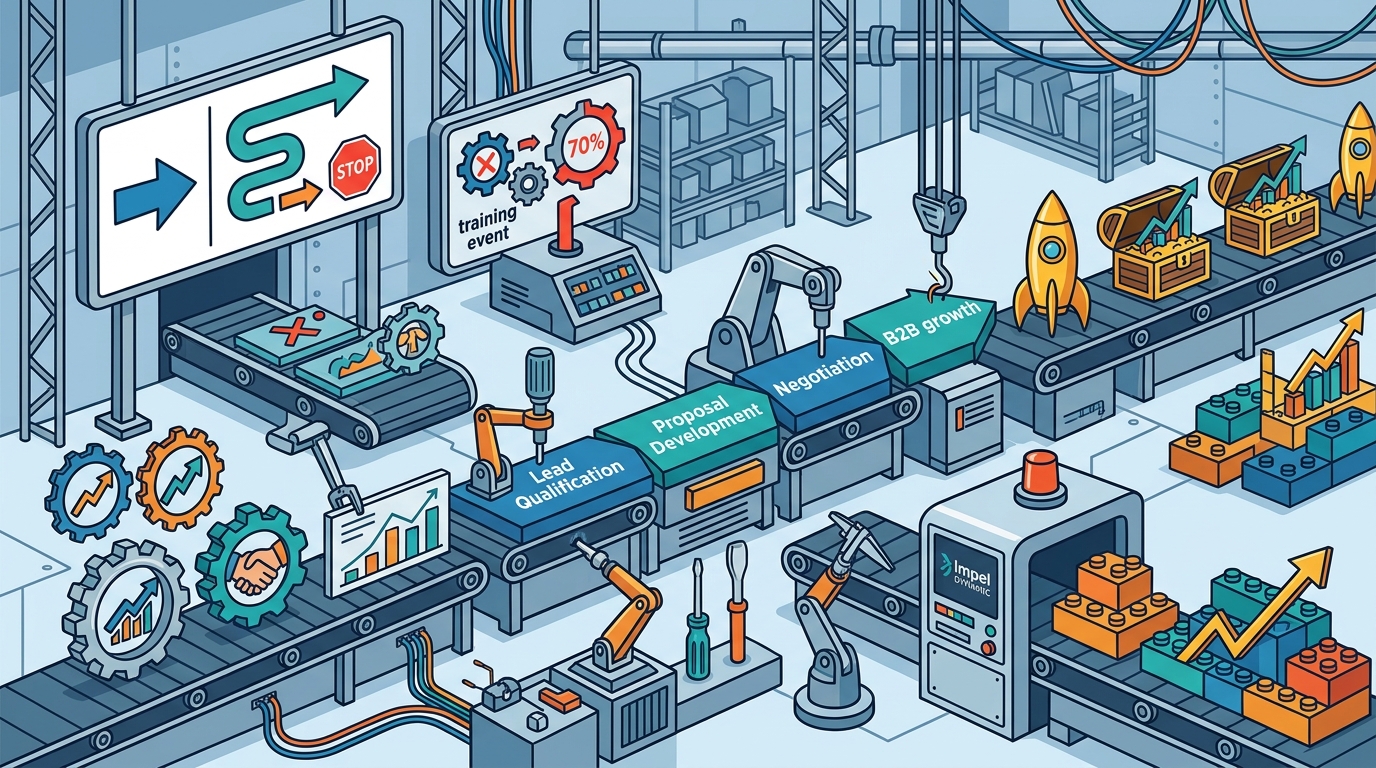
Sales training implementation often fails not because the content is poor, but because the delivery method ignores the daily reality of the sales team. According to McKinsey research, 70% of digital transformations fail due to a lack of employee adoption and engagement. This statistic highlights a critical truth: training is not an event. It is a continuous behavioral shift that requires structural support. Businesses that ignore this reality waste budget on one-off workshops that vanish from memory within weeks. To solve this, organizations must move from passive learning to active application. This guide outlines the specific challenges B2B companies face and provides actionable solutions to ensure your sales team retains and applies new skills immediately.
Challenge 1: The Knowledge Retention Gap
The most common failure point in sales training is the "forgetting curve." Salespeople attend a two-day workshop, feel energized, and then return to their desks. Within 48 hours, the specific frameworks taught begin to fade. Without reinforcement, they revert to old habits. This is not a failure of intelligence. It is a failure of design. Effective training must account for the cognitive load of selling. It requires spaced repetition and immediate application.
Solution: Implement Blended Learning Models
To combat retention loss, you must mix delivery methods. A purely virtual course lacks the human nuance of role-play. A purely in-person course lacks the scalability of digital review. Impel Dynamic utilizes a blended model that combines face-to-face interaction with online reinforcement. This approach ensures that concepts are not just heard, but practiced. When you combine live coaching with digital resources, you create a feedback loop that solidifies learning. This method is essential for teams that need to master complex B2B sales cycles.
Challenge 2: Misalignment Between Training and Reality
Generic sales training fails because it does not reflect the specific products, markets, or customer personas of your business. If your training teaches a theoretical framework that does not match your actual sales process, your team will reject it. They will view the training as academic rather than practical. This disconnect creates a barrier to adoption. Salespeople need tools that work in their specific context, not abstract theories.
Solution: Deploy Bespoke Sales Programmes
Customization is the antidote to irrelevance. A bespoke sales programme is tailored to your organization’s unique challenges and goals. It addresses the specific objections your team faces and the specific value propositions you offer. By meeting your team at their current knowledge level, you bridge the gap between theory and practice. This ensures that the training is immediately applicable. Your team can start using the new skills from day one. This approach transforms training from a cost center into a revenue driver.
Challenge 3: Lack of Managerial Reinforcement
Sales managers are often the biggest bottleneck in training implementation. They are busy hitting their own quotas and may view training as a distraction. Without active reinforcement, the training content dies. Managers must shift from being task managers to performance coaches. They need to understand the new methodology to guide their teams effectively. If they do not buy in, the team will not either.
Solution: Integrate Leadership Coaching
Training must extend beyond the sales reps to include their managers. Leadership coaching helps management teams standardize sales methodology across the organization. It equips leaders with the tools to coach their teams using the new framework. This creates a consistent culture of selling. When leaders model the behavior, the team follows. This alignment is critical for scaling sales processes. It ensures that the training investment is protected by daily management practices.
Challenge 4: Inability to Measure ROI
Many businesses struggle to prove the value of their training programs. They track attendance but not outcomes. This lack of data makes it difficult to justify future budgets. Without clear metrics, training is seen as an expense rather than an investment. To solve this, you must define success before the training begins. You need to link learning activities to business results.
Solution: Establish Clear KPIs and Improvement Plans
Effective training includes a clear improvement plan with measurable KPIs. These metrics should track behavior change, not just test scores. For example, track the number of new opportunities created or the increase in deal size. Impel Dynamic clients have closed $100,000 to $1,000,000 in new deals since training. This demonstrates that measurable results are possible when training is tied to performance. By monitoring every step of the way, you can adjust the program in real time. This data-driven approach ensures continuous improvement and justifies the investment.
Challenge 5: Resistance to New Methodologies
Sales teams often resist new methodologies because they fear losing their personal style or struggling to learn new skills. This resistance is natural. Change is difficult. However, if the training does not address this psychological barrier, it will fail. You must show the team how the new method makes their jobs easier, not harder. You must demonstrate the value of the new approach in terms of their own success.
Solution: Focus on Consultative Selling and Confidence
Shift the focus from "learning a script" to "mastering a mindset." Teach consultative selling techniques that help reps identify client challenges and match them to solutions. This approach empowers reps rather than restricting them. It builds confidence in high-stakes conversations. When reps feel competent, they embrace the new method. This confidence is crucial for winning C-suite deals. It transforms them from order takers to trusted advisors. This shift is essential for long-term growth.
Comparing Training Delivery Methods
Choosing the right delivery method is critical for overcoming implementation challenges. Each method has distinct advantages depending on your team's size, location, and learning style. The table below summarizes the core differences to help you decide.
| Method | Best For | Key Advantage | Limitation |
|---|---|---|---|
| Face-to-Face Training | Building team cohesion and deep skill practice | Immediate feedback and high engagement | Higher cost and logistical complexity |
| Virtual Training | Geographically dispersed teams | Scalability and flexibility | Requires strong self-discipline from reps |
| Blended Model | Maximizing retention and ROI | Combines depth with accessibility | Requires careful coordination |
| Sales Coaching | Individual performance improvement | Personalized guidance and accountability | Time-intensive for coaches |
Key Takeaways
- Retention Requires Reinforcement: One-off workshops are ineffective. Use blended learning to maintain knowledge over time.
- Customization is Critical: Generic training fails. Use bespoke programmes that align with your specific sales process.
- Manager Buy-In is Essential: Train your leaders to coach using the new methodology. They are the bridge to adoption.
- Measure Behavior, Not Just Attendance: Track KPIs like deal size and new opportunities to prove ROI.
- Build Confidence, Not Just Skills: Focus on consultative selling to empower reps and reduce resistance to change.
- Impel Dynamic’s Track Record: With 25+ years of experience and a 99% client satisfaction rate, proven methods yield tangible results.
- Scalable Processes Drive Growth: A structured sales process allows your business to absorb more volume and complexity.
Frequently Asked Questions
How long does it take to see results from sales training?
Results vary based on the complexity of the sales cycle. However, with a bespoke programme and immediate application, teams often see initial behavior changes within weeks. Significant revenue impact typically follows as new skills are reinforced over 3 to 6 months.
What is the difference between sales training and sales coaching?
Sales training provides the knowledge and frameworks. Sales coaching provides the ongoing guidance and feedback to apply that knowledge. Coaching is essential for sustaining long-term performance improvements.
Can virtual training be as effective as in-person training?
Yes, when designed correctly. Virtual training offers flexibility and scalability. However, it must include interactive elements and follow-up reinforcement to be effective. A blended model often yields the best results.
How do I measure the ROI of sales training?
Track specific KPIs such as win rates, average deal size, and sales cycle length. Compare these metrics before and after the training. Impel Dynamic uses clear improvement plans to monitor these steps.
Why do sales teams resist new methodologies?
Resistance often stems from fear of failure or lack of understanding. By focusing on how the new method makes their jobs easier and more successful, you can overcome this resistance. Leadership support is also crucial.
What is consultative selling?
Consultative selling is a methodology that focuses on understanding the client’s deepest challenges and matching them to the perfect solution. It builds trust and positions the salesperson as a valued partner.
How does Impel Dynamic tailor its training?
Impel Dynamic meets you at your current knowledge level. They analyze your specific challenges and create a tailored programme that addresses your unique needs. This ensures immediate applicability.
Start Your Transformation
Stop letting implementation challenges drain your sales potential. The gap between having a sales methodology and executing it widens fast as companies scale. Leadership coaching is the bridge that turns a chosen strategy into daily habit. Impel Dynamic specializes in B2B and B2C sales training for organizations of all sizes. We help you win more business, create scalable sales processes, and define next practices for the future. Our clients have closed significant new deals by adopting our proven method. Do not wait for your competitors to outpace you. Book a call with our experts today to design a scalable sales process that drives long-term conversion rates. Transform your team from order takers to trusted advisors. Get a quote for your bespoke sales programme now.