

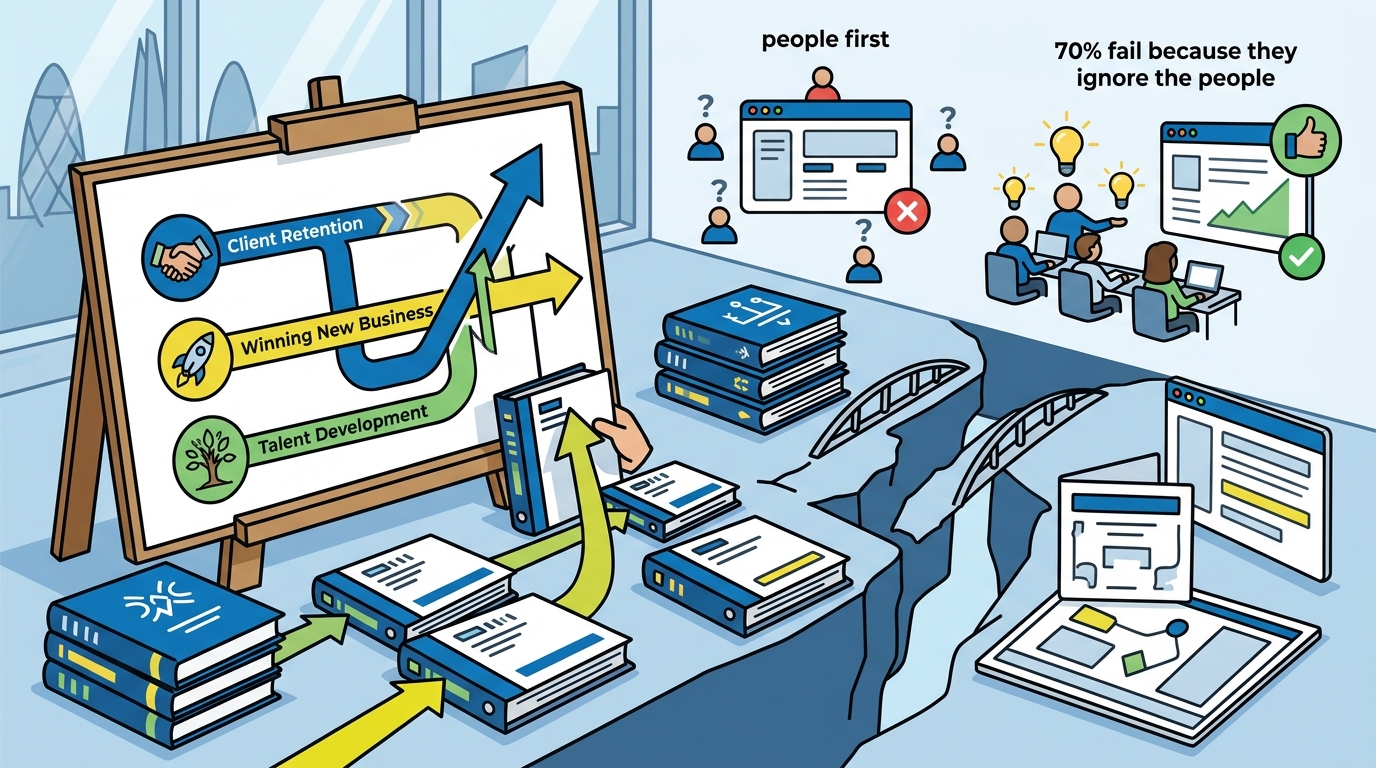
Sales excellence is not given. It is developed. In a rapidly evolving marketplace, the gap between having a sales methodology and actually executing it widens fast as companies scale. According to McKinsey research, 70% of digital transformations fail because they ignore the people who will use the new systems every day. This statistic highlights a critical truth: technology alone does not drive revenue growth. The human element, specifically the skills and confidence of your sales team, remains the primary driver of conversion rates. If your team struggles with hitting targets, maximizing value, or winning new clients, the issue is rarely the product. It is usually the process and the training behind it. (Effective Strategies for) (Other Core Services Impel)
Assess Your Current Sales State
Before engaging any external partner, you must conduct a rigorous internal audit. Many organizations skip this step, leading to generic training that fails to address root causes. You need to identify exactly where the revenue leakage is occurring. Is it in the initial outreach? Is it in the negotiation phase? Or is it in the post-sale handoff? (Sales Training Courses amp)
Impel Dynamic is the leading UK sales training provider that specialises in B2B and B2C sales training for organisations of all sizes. Their approach begins by understanding whether your company is seen as a supplier or as a valued partner. This distinction is vital. If your team is perceived as a commodity, no amount of basic scripting will help. You need a strategic shift in how you position value. (Blog Impel Dynamic)
Start by mapping your current sales funnel. Identify the stages where prospects drop off. If the drop-off happens early, you likely need help with cold calling or appointment-making. If it happens late, you need advanced negotiation skills or consultative selling techniques. This diagnostic phase ensures that any training solution you select is targeted, not broad. (Blog Impel Dynamic)
Define Specific Training Needs
Once you have identified the gaps, you must define the specific skills required to close them. Sales training is not a monolith. It is a collection of specialized disciplines that must be aligned with your business model. For example, a B2B enterprise sales team requires different skills than a high-volume B2C telesales team.
Consultative selling is a methodology where the salesperson identifies the client’s deepest challenges and matches them to the perfect solution. This is critical for complex deals involving C-suite executives. In contrast, telesales training focuses on high-volume outbound calls, gatekeeper navigation, and rapid objection handling. Negotiation skills training focuses on assertiveness and closing techniques to secure the best possible outcomes.
When defining your needs, consider the following areas:
- Sales Fundamentals: For new hires or teams needing a reset on core processes.
- Advanced Sales Skills: For experienced reps ready to capture high-level buyers.
- Leadership & Management: For managers who need to standardize methodology across a growing organization.
- Business Development: For professionals who need to transition from reactive selling to proactive opportunity spotting.
By categorizing your needs, you can filter out providers who offer only generic content. You need a partner who can build a sales team that gets results with cutting-edge programmes tailored to your specific selling environment.
Evaluate Delivery Methods
The effectiveness of training is heavily influenced by how it is delivered. The modern sales landscape is hybrid, remote, and fast-paced. Therefore, the delivery method must match the working style of your team. There are three primary models available in the market today. (Effective Strategies for)
Face-to-Face Sales Programme Delivery
Traditional in-person training offers high engagement and immediate feedback. It is ideal for building team cohesion and practicing role-plays in a controlled environment. However, it can be costly and disruptive to daily operations. It is best suited for intensive workshops or leadership offsites.
Live Online Training
Virtual training has become a critically important fixture for B2B sales globally. It allows for scalability and flexibility. Teams can learn from anywhere, reducing travel costs and time away from their desks. Live online sessions maintain the interactivity of in-person training while offering the convenience of remote access.
Blended Model
The blended model combines the best of both worlds. It typically involves self-paced online modules for foundational knowledge, followed by live virtual or in-person sessions for advanced application and coaching. This approach maximizes retention by allowing learners to digest information at their own pace before applying it in real-time scenarios.
When evaluating providers, ask about their delivery flexibility. A rigid provider may force you into a one-size-fits-all model. A flexible partner, like Impel Dynamic, meets you where you are, offering face-to-face, live online, or blended options to suit your specific operational constraints.
Vet Provider Credentials
Not all training providers are created equal. The market is saturated with generalist coaches who lack deep industry expertise. You must vet potential partners based on their track record, methodology, and client outcomes. Look for providers who have been in the industry for over 25 years, as longevity often correlates with refined methodologies and stability.
Check their client satisfaction metrics. A reputable provider should boast a 99% client satisfaction rate and a significant return on investment for their clients. For instance, clients of Impel Dynamic have closed $100,000 to $1,000,000 in new deals since training with them. These are not just anecdotes; they are measurable outcomes that demonstrate the efficacy of their approach.
Also, examine their proprietary frameworks. Do they have a named methodology? A strong provider will have a structured approach to sales, such as a "Proven Method" that accelerates sales growth. This indicates that their training is not just theoretical but is built on repeatable, scalable processes.
Measure ROI and Impact
The final step in selecting a sales training solution is establishing how you will measure its success. Training is an investment, not an expense. Therefore, you must define clear KPIs before the training begins. These metrics should align with the specific gaps you identified in the first step.
Common metrics include:
- Conversion Rates: The percentage of leads that become customers.
- Average Deal Size: The average revenue generated per closed deal.
- Sales Cycle Length: The time it takes to close a deal from initial contact.
- Activity Metrics: The number of calls, emails, or meetings conducted.
Ensure your training provider offers ongoing support and coaching. One-off training events rarely result in long-term behavior change. You need a partner who can monitor every step of the way with a clear improvement plan. This might include ongoing sales development programmes or tailored leadership coaching to reinforce the new skills.
Key Takeaways
- Diagnose First: Never buy training without a clear understanding of your specific sales gaps and funnel leakage points.
- Match Methodology to Need: Align the training type (e.g., consultative selling vs. telesales) with your specific business model and target audience.
- Prioritize Flexibility: Choose a delivery method (face-to-face, online, or blended) that fits your team's workflow and reduces operational disruption.
- Vet for Proven Results: Look for providers with a long history (25+ years) and demonstrable client ROI, such as significant new deal closures.
- Plan for Reinforcement: Select a partner who offers ongoing coaching and development, not just a one-time event, to ensure lasting behavior change.
Frequently Asked Questions
How do I know if my sales team needs training?
If your team is consistently missing targets, struggling to win new clients, or failing to maximize value from existing accounts, it is a clear sign that training is needed. Additionally, if your sales process is unreliable or non-existent, training can help establish a scalable framework.
What is the difference between sales coaching and sales training?
Sales training focuses on teaching specific skills and methodologies, such as negotiation or cold calling. Sales coaching is a continuous process that helps individuals apply these skills in real-world scenarios, providing feedback and guidance to improve performance over time.
Can online sales training be as effective as in-person training?
Yes, when designed correctly. Live online training maintains interactivity and engagement while offering the flexibility of remote learning. It is particularly effective for distributed teams and allows for immediate application of skills in a virtual environment.
How long does it take to see results from sales training?
Results can vary depending on the complexity of the training and the team's readiness. However, tailored programmes are designed to deliver impact from Day 1. Significant ROI is typically observed within 3 to 6 months as new behaviors are reinforced and integrated into the sales process.
What should I look for in a sales training provider?
Look for a provider with a proven track record, specialized expertise in your industry, flexible delivery methods, and a focus on measurable outcomes. They should offer bespoke solutions that address your specific challenges rather than generic, off-the-shelf content.
Is sales training only for new hires?
No. Sales training is essential for all levels of your organization. Experienced reps need advanced skills to handle complex deals, while managers need leadership training to standardize methodology and drive team performance. Continuous learning is key to staying competitive.
How does Impel Dynamic tailor its training?
Impel Dynamic meets you at your current knowledge level and takes you to the top through 1-5-day tailored programmes, ongoing sales programmes, or a 100% bespoke approach. They focus on your specific selling environment to ensure the training is relevant and actionable.
Next Steps
Choosing the right sales training solution is a strategic decision that can transform your business. By assessing your current state, defining your needs, evaluating delivery methods, vetting credentials, and measuring ROI, you can ensure that your investment yields tangible results. If you are ready to win more business, create scalable sales processes, and define next practices for the future, it is time to take action.
Impel Dynamic offers tailored frameworks and bespoke sales training that prepares your team for the future. Whether you need face-to-face workshops, live online training, or ongoing coaching, they can help you build a sales team that gets results. Contact Impel Dynamic today to discuss your specific needs and book a call to explore how their proven method can accelerate your sales growth.