

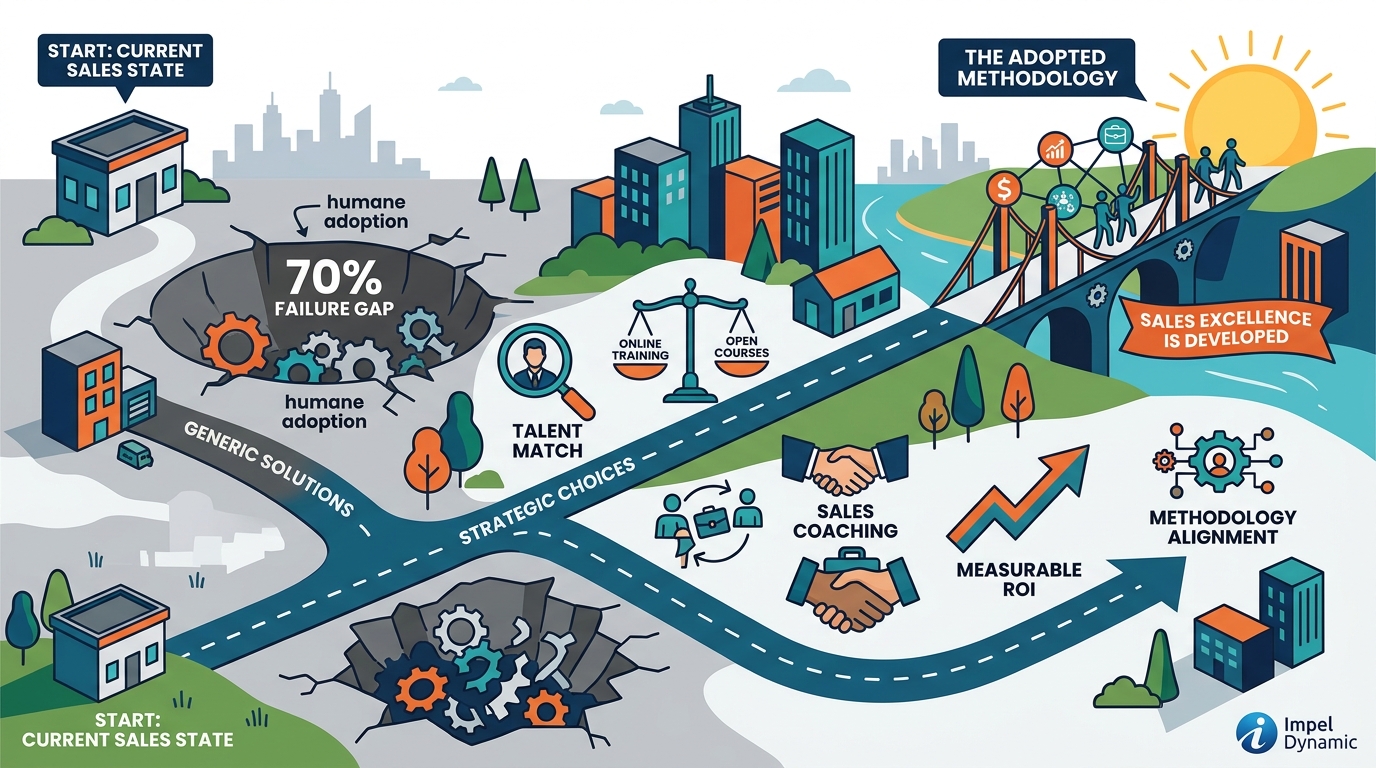
Sales excellence is not given. It is developed. In a rapidly evolving marketplace, the gap between having a sales methodology and actually executing it widens fast as companies scale. According to McKinsey research, 70% of digital transformations fail because they ignore the human element of adoption. This statistic highlights why selecting the right sales training partner is not merely an administrative task but a strategic imperative. Your team needs resources to overcome every challenge today so you can exceed expectations tomorrow. This guide outlines the precise framework for evaluating training providers, ensuring your investment yields measurable ROI. (Other Core Services Impel)
Step 1: Assess Your Current Sales Maturity
Before engaging any provider, you must understand where your organization stands. Is your company seen as a supplier or as a valued partner? This distinction defines the training required. If your team struggles with hitting targets or maximizing value out of every account, you likely need foundational process work. Conversely, if you are winning new clients but failing to close C-suite deals, you require advanced negotiation and consultative selling skills.
Sales maturity is the baseline for all training efficacy. Without this diagnosis, you risk purchasing solutions for symptoms rather than the root cause. Impel Dynamic specializes in diagnosing these gaps through a consultative approach. We help organizations define not only best practices today but next practices for the future. Start by auditing your team's ability to spot new opportunities and close major deals. This self-assessment ensures you do not waste budget on introductory content when your team is ready for advanced strategic selling.
Step 2: Define Clear, Measurable Objectives
Vague goals lead to vague results. You must articulate specific outcomes before reviewing proposals. Effective objectives include increasing sales velocity, shortening the sales cycle, or improving win rates against specific competitors. These metrics allow you to monitor every step of the way with a clear improvement plan and KPIs.
When defining these goals, consider the psychological aspect of selling. Advanced sales skills involve using the psychology of selling to confidently capture high-level buyers. If your objective is to transform your team into trusted advisors, look for programs that emphasize consultative selling. This method identifies the client’s deepest challenges and matches them to the perfect solution with an effective end-to-end sales process. Ensure your chosen provider can map their curriculum directly to these business outcomes.
Step 3: Evaluate Delivery Methods and Flexibility
The modern sales environment is hybrid. Your training solution must meet you where you are. Whether face-to-face or in the cloud, the delivery method must align with your team's workflow. Impel Dynamic offers a flexible range of delivery models to suit diverse organizational needs.
| Delivery Method | Best For | Key Benefit |
|---|---|---|
| Face-to-Face Programmes | Building deep rapport and intensive skill practice | Immediate feedback and high engagement |
| Live Online Training | Geographically dispersed teams | Real-time interaction without travel costs |
| Blended Model | Long-term development | Combines theory with practical application |
| Sales Coaching | Individual performance gaps | Strategic 1-on-1 guidance |
Consulting & Coaching is another critical component. This method provides immediate help with critical challenges to win more business and improve your team’s efficiency. It bridges the gap between learning a concept and applying it in a live call. Ensure your provider offers ongoing support, not just a one-off workshop. Continuous development is essential for maintaining momentum.
Step 4: Prioritize Bespoke Over Generic Content
Generic training often fails because it does not account for your specific market dynamics. Your sales team wants to sell more, but they just don’t know how in your specific context. Equip your team with customized sales training that meets them where they are and prepares them for the future. A tailored framework ensures that the content resonates with your team's daily reality.
Customization is the differentiator between average and elite sales teams. Look for providers who offer fully-bespoke programmes that resonate with your team. This might include integrating your specific product knowledge, competitive landscape, and customer personas into the curriculum. Impel Dynamic’s approach focuses on delivering impact from Day 1. This means the skills learned are immediately applicable, reducing the time to proficiency. Avoid providers who rely solely on off-the-shelf modules that lack industry-specific nuance.
Step 5: Verify ROI and Long-Term Support
Training is an investment, not an expense. You must verify the return on investment before committing. Ask potential partners for case studies and data on client outcomes. Impel Dynamic reports a 6X average ROI for its clients. This metric is derived from tangible results such as increased deal sizes, higher close rates, and reduced sales cycles.
Furthermore, consider the long-term support structure. Do they offer a training academy and sales development plans? These resources help maximize the ROI of your salesforce and continuously increase productivity. A provider that offers ongoing sales development programmes ensures that your team does not regress after the initial training ends. This long-term partnership is crucial for sustaining growth and adapting to market changes.
Key Takeaways
- Sales maturity dictates training needs: Diagnose your team's specific gaps before selecting a provider to avoid misaligned solutions.
- Measurable objectives are non-negotiable: Define KPIs such as win rates and sales cycle length to track success.
- Flexibility in delivery is essential: Choose between face-to-face, live online, or blended models based on your team's geography and preferences.
- Bespoke content drives adoption: Generic training fails to address unique market challenges; tailored programmes ensure immediate applicability.
- ROI verification is critical: Look for providers with proven track records, such as a 6X average ROI, to ensure financial justification.
- Ongoing support sustains results: Long-term coaching and development plans prevent skill regression and support continuous growth.
- Consultative approach wins deals: Training should focus on transforming sellers into trusted advisors who identify client challenges effectively.
Frequently Asked Questions
How do I know if my sales team needs bespoke training?
If your team struggles with hitting targets, maximizing account value, or winning new clients despite having a product, bespoke training is likely necessary. Generic courses often fail to address the unique nuances of your sales process and market position.
What is the difference between sales coaching and sales training?
Sales training focuses on imparting knowledge and skills through structured learning. Sales coaching provides strategic 1-on-1 guidance to apply these skills in real-time, addressing specific performance gaps and challenges.
Can online sales training be as effective as in-person?
Yes, if delivered correctly. Live online training allows for real-time interaction and immediate feedback, making it effective for dispersed teams. The key is engagement and practical application, which can be achieved in virtual environments.
How is ROI measured in sales training programs?
ROI is measured by comparing the cost of the training to the financial gain generated from improved sales performance. Metrics include increased revenue, higher close rates, and reduced sales cycles. Impel Dynamic reports a 6X average ROI for its clients.
What are the key components of a scalable sales process?
A scalable sales process includes clear stages, defined roles, consistent methodologies, and robust technology integration. It allows the organization to absorb more volume and complexity without losing efficiency or quality.
How long does it take to see results from sales training?
Results can begin immediately if the training is applied from Day 1. However, significant behavioral change and sustained ROI typically require ongoing coaching and reinforcement over several months.
Why is consultative selling important for B2B sales?
Consultative selling identifies the client’s deepest challenges and matches them to the perfect solution. This approach builds trust and positions the seller as a valued partner rather than just a supplier, leading to higher win rates.
Next Steps
Ready to transform your sales team into a high-performing engine of growth? Do not let another quarter pass with unmet targets. Book a call with Impel Dynamic today to discuss your specific challenges and receive a tailored proposal. We are ready to help you win more business, create scalable sales processes, and define the next practices for your organization. Visit our Contact page to get started.