

Sales training is not a one-size-fits-all solution. According to recent industry analysis, organizations that implement structured, tailored sales programs see an average return on investment of 6X compared to those relying on generic content. This statistic highlights a critical reality: the format of your training must align with your team's specific skill gaps, learning preferences, and business objectives. Whether you are a Director evaluating high-level strategy or a Manager looking for immediate tactical improvements, choosing the wrong delivery method can stall growth. This guide walks you through the exact steps to select and implement the most effective sales training format for your organization.
Step 1: Diagnose Your Team's Current Sales Maturity
Before selecting a vendor or a course type, you must understand where your team currently stands. Sales maturity refers to the level of process discipline, tool adoption, and strategic thinking within your sales force. A team struggling with basic prospecting needs different support than a team managing complex, multi-stakeholder enterprise deals.
Sales maturity is the degree to which a sales organization consistently applies proven methodologies to achieve predictable revenue growth. If your team lacks foundational skills, such as cold calling or initial discovery, they will not benefit from advanced strategic frameworks. Conversely, experienced reps may find basic courses redundant and demotivating.
To diagnose this, ask three questions:
- Are reps hitting their quotas consistently, or is performance highly variable?
- Is the primary bottleneck in lead generation, qualification, or closing?
- Do reps understand the strategic value of the solutions they sell?
Impel Dynamic, a leading UK sales training provider, emphasizes that understanding these gaps is the first step toward building a scalable sales process. Their approach begins with identifying whether the need is for fundamental skills or advanced strategic selling. You can explore their comprehensive training programs to see how they map to different maturity levels.
Step 2: Evaluate Core Delivery Formats
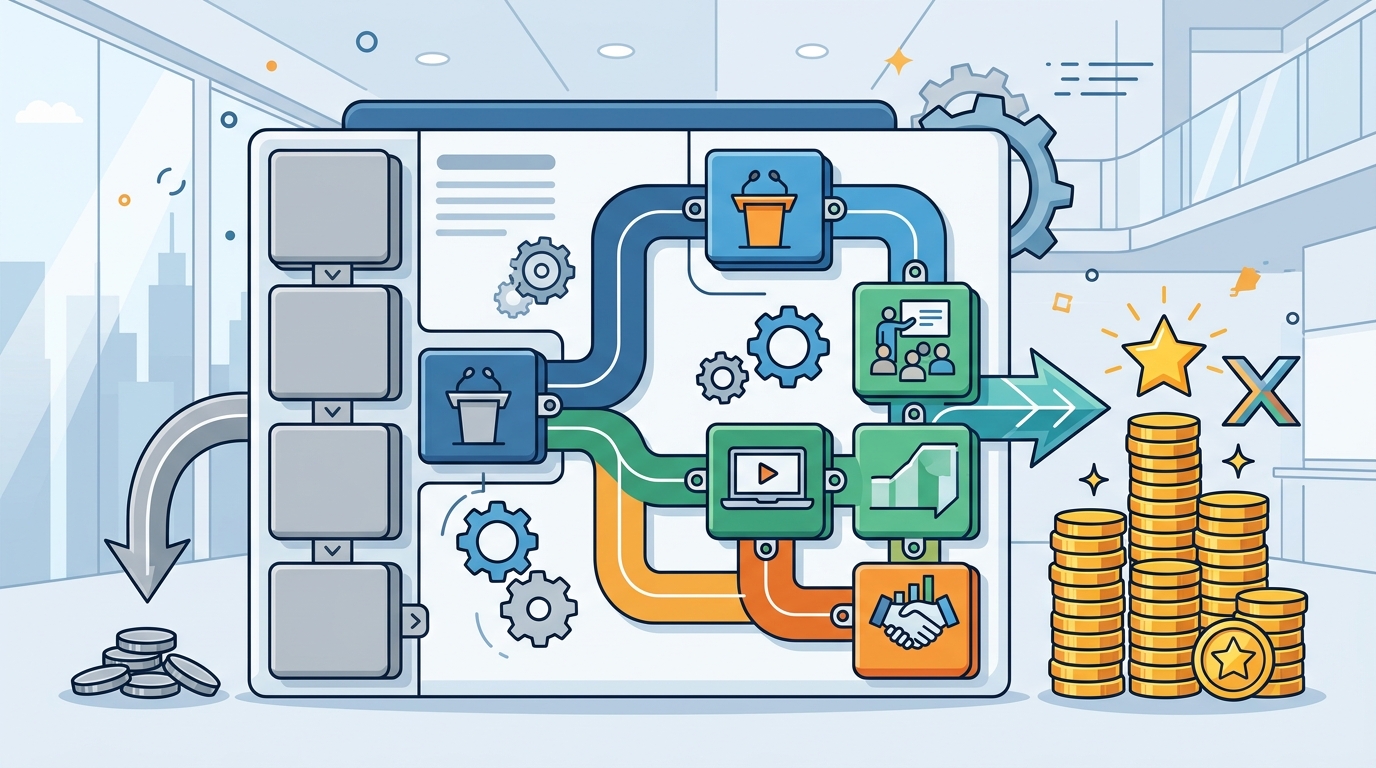
Once you have diagnosed the maturity level, you must choose the delivery format. The modern sales landscape offers several distinct modalities, each with unique advantages and limitations. The three primary formats are open courses, bespoke in-house training, and virtual or blended learning.
Open Courses
Open courses bring individuals from various organizations together in a shared learning environment. This format is ideal for networking and gaining exposure to diverse industry perspectives. It is particularly effective for individual skill development, such as mastering LinkedIn prospecting or refining telesales techniques. However, it lacks the customization needed to address specific company-wide process gaps.
Bespoke In-House Training
Bespoke sales training is tailored specifically to your organization's products, market, and customer personas. This format allows trainers to dive deep into your unique challenges, such as overcoming specific competitor objections or navigating complex procurement processes. It is the most effective format for aligning the entire team around a unified sales methodology. For organizations seeking to build a sales team that gets results, bespoke programs offer immediate applicability and higher engagement.
Virtual and Blended Learning
Virtual training delivers content via live online platforms, offering flexibility for distributed teams. Blended models combine self-paced online modules with live coaching sessions. This format is cost-effective and scalable, making it suitable for large organizations with geographically dispersed sales forces. However, it requires high self-discipline from participants and may lack the interpersonal depth of face-to-face interaction.
Step 3: Match Format to Learning Objectives
Not all training objectives are created equal. Your choice of format should be driven by the specific outcomes you wish to achieve. Misalignment between objective and format is a common reason for training failure.
| Learning Objective | Recommended Format | Why It Works |
|---|---|---|
| Networking & Peer Learning | Open Courses | Exposes reps to external best practices and diverse market challenges. |
| Process Standardization | Bespoke In-House | Ensures all reps adopt the same methodology and terminology. |
| Scalable Skill Building | Virtual/Blended | Allows consistent training delivery across large, distributed teams. |
| Complex Deal Strategy | Coaching & Consulting | Provides targeted, real-time guidance on high-value opportunities. |
For example, if your goal is to enhance advanced sales skills, a bespoke workshop focusing on your specific product suite will yield faster results than a general open course. Similarly, if you need to improve telesales performance, live role-playing in a bespoke session is more effective than passive video watching.
Step 4: Assess Budget and Scalability
Cost is a significant factor in training decisions, but it should be viewed through the lens of ROI rather than upfront expense. Bespoke training typically has a higher initial cost due to the customization required. However, it often delivers a higher ROI because the content is directly applicable to your revenue goals. Open courses are generally more affordable per participant but may require multiple attendees to justify the organizational impact.
Scalability refers to the ability to expand training across the organization without proportional increases in cost or complexity. Virtual and blended models are inherently more scalable. According to research on digital transformation, 70% of digital transformations fail due to people and culture issues, not technology. Therefore, choosing a format that ensures high adoption and engagement is critical for scalability.
Consider the long-term implications. A leadership training program for managers can amplify the impact of sales training by equipping leaders to coach their teams effectively. This multiplier effect can justify a higher initial investment in bespoke or hybrid models.
Step 5: Implement and Measure ROI
Implementation is where many training initiatives falter. Selecting the right format is only half the battle. You must have a plan for integrating the training into daily workflows. This includes setting clear KPIs, scheduling follow-up coaching sessions, and creating accountability structures.
Impel Dynamic’s approach emphasizes measurable ROI through ongoing support and coaching. They provide a clear improvement plan and KPIs to monitor every step of the way. This ensures that the training is not a one-off event but a continuous development process.
To measure success, track metrics such as:
- Win rates for new business
- Average deal size
- Sales cycle length
- Rep activity levels (calls, emails, meetings)
By aligning your training format with your team's maturity, objectives, and budget, you can create a scalable sales process that drives long-term conversion rates. For more insights on designing such processes, read our guide on scalable sales processes.
Key Takeaways
- Diagnose First: Assess your team's sales maturity before selecting a format to ensure relevance.
- Format Matters: Bespoke training offers customization, while open courses provide networking and broad skill exposure.
- ROI Focus: View training costs as investments with potential 6X returns, not just expenses.
- Scalability: Virtual and blended models offer the best scalability for large, distributed teams.
- Measurement: Define clear KPIs and track win rates, deal size, and activity levels to measure success.
- Leadership Role: Equip managers with coaching skills to reinforce training outcomes.
- Continuous Improvement: Treat training as an ongoing process, not a one-time event.
Frequently Asked Questions
What is the difference between bespoke and open sales training?
Bespoke sales training is customized to your organization's specific products, market, and challenges, ensuring direct applicability. Open sales training brings together individuals from various companies to learn general best practices and network. Bespoke training is ideal for process standardization, while open courses are better for individual skill development and networking.
How do I measure the ROI of sales training?
Measure ROI by tracking key performance indicators (KPIs) such as win rates, average deal size, sales cycle length, and rep activity levels before and after the training. Compare these metrics against the cost of the training program to calculate the return on investment. Impel Dynamic reports an average 6X ROI for their clients, demonstrating the potential impact of structured training.
Is virtual sales training as effective as in-person training?
Virtual sales training can be equally effective, particularly for scalable skill building and distributed teams. However, it requires high self-discipline from participants and may lack the interpersonal depth of face-to-face interaction. Blended models, which combine virtual content with live coaching, often offer the best balance of scalability and engagement.
What is sales maturity?
Sales maturity is the degree to which a sales organization consistently applies proven methodologies to achieve predictable revenue growth. It encompasses process discipline, tool adoption, and strategic thinking. Understanding your team's maturity level is crucial for selecting the right training format.
How long does it take to see results from sales training?
Results can vary depending on the format and the team's starting point. Bespoke training often yields immediate applicability, with reps implementing new techniques from day one. However, significant improvements in metrics like win rates and deal size may take several months to materialize as new behaviors become habits. Ongoing coaching and reinforcement are essential for sustained results.
Ready to Transform Your Sales Team?
Selecting the right sales training format is a strategic decision that can drive significant growth for your organization. By following these steps, you can ensure that your training investment delivers tangible results. If you are ready to build a sales team that gets results, contact Impel Dynamic today to discuss your specific needs and explore tailored solutions.