

Organizations that invest in structured sales development see a 24% increase in revenue growth compared to those that do not. This statistic highlights the critical need for strategic allocation of training budgets. However, not all training formats deliver equal value. The choice between open courses, bespoke programs, and virtual training significantly impacts both immediate costs and long-term performance gains. Understanding these differences is essential for maximizing your return on investment. (Other Core Services Impel)
Understanding Training Formats
Sales training is not a one-size-fits-all solution. The effectiveness of a program depends heavily on how well it aligns with your team's current skill level and your organization's specific market challenges. Impel Dynamic specializes in delivering tailored frameworks that address these unique needs. The primary formats available include open courses, bespoke in-house programs, and virtual training modules. (Blog Impel Dynamic)
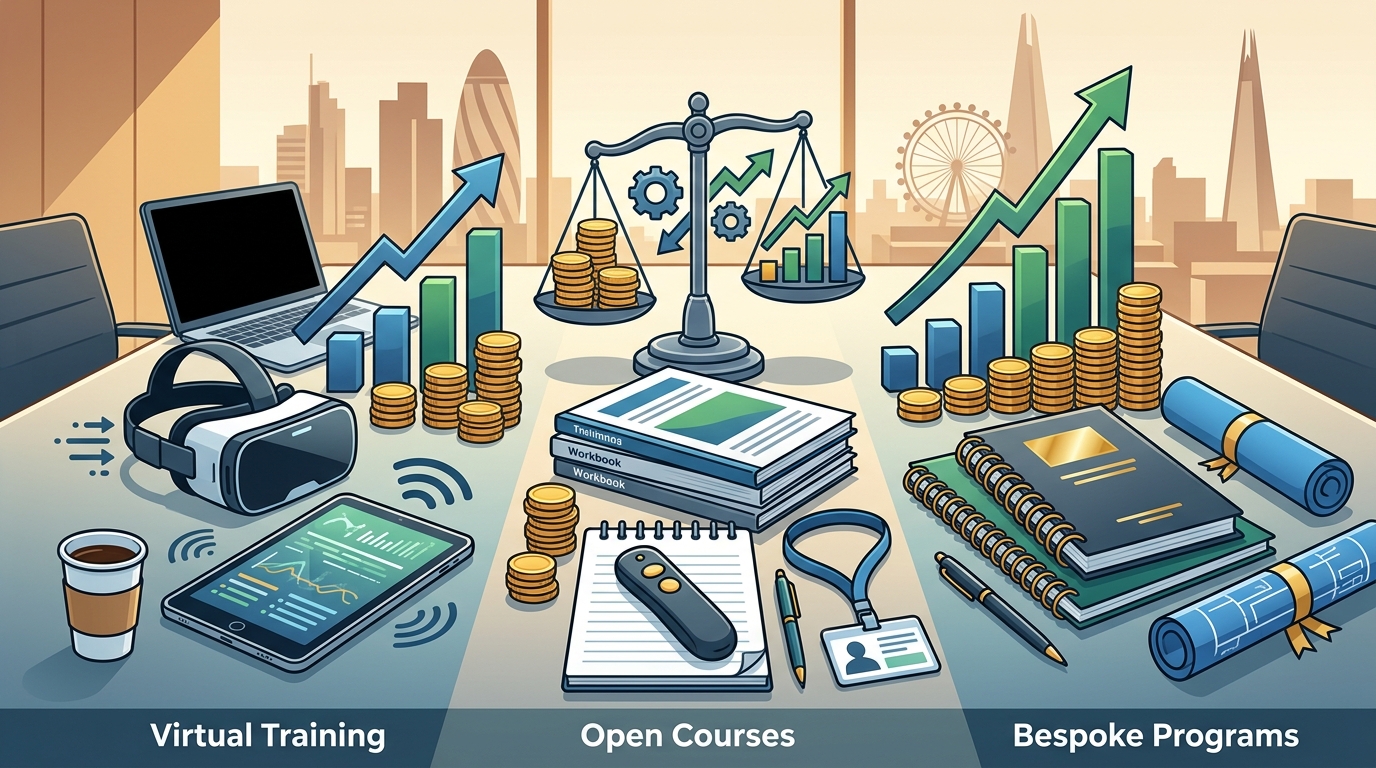
Open courses are designed for individuals to acquire valuable sales skills alongside like-minded professionals. These are ideal for foundational learning and networking. In contrast, bespoke sales programs are fully customized to meet the specific requirements of your organization. These programs are delivered over 1 to 5 days and focus on immediate application. Virtual training offers flexibility, allowing teams to learn from anywhere while maintaining engagement through digital tools.
Each format serves a distinct purpose. Open courses provide broad exposure to industry best practices. Bespoke programs offer deep, targeted intervention for specific business challenges. Virtual training ensures continuity and scalability for distributed teams. Choosing the right format requires a clear understanding of your team's goals and budget constraints.
Cost Analysis by Format
The financial investment in sales training varies significantly based on the delivery method. Open courses typically have a lower per-person cost but may lack the customization needed for complex B2B sales environments. Bespoke programs, while more expensive upfront, often deliver higher ROI due to their targeted nature. Virtual training offers a middle ground, providing scalability and reduced logistical costs.
According to industry data, companies that invest in high-quality sales training see an average ROI of 6X. This figure underscores the importance of selecting a format that maximizes value. Open courses are cost-effective for individual skill development but may not address organizational-wide issues. Bespoke programs, though pricier, are designed to deliver immediate results and measurable improvements in sales performance.
Virtual training costs are influenced by the technology platform and the duration of the program. While initial setup costs may be higher, the long-term savings from reduced travel and accommodation expenses can be substantial. The key is to evaluate the total cost of ownership, including hidden costs such as time away from sales activities.
ROI Comparison
Return on investment is the ultimate metric for evaluating sales training effectiveness. Impel Dynamic reports a 99% client satisfaction rate and an average ROI of 6X for its tailored programs. This high return is attributed to the personalized nature of the training, which ensures that skills are directly applicable to the client's specific sales context.
Open courses offer a lower initial investment but may yield a lower ROI if the content is not directly relevant to the participant's role. Bespoke programs, while more expensive, often result in significant revenue growth by addressing specific pain points and closing knowledge gaps. Virtual training can deliver comparable ROI to in-person sessions if the content is engaging and the technology is robust.
The following table summarizes the cost and ROI characteristics of each format:
| Training Format | Cost Level | Customization | Typical ROI | Best For |
|---|---|---|---|---|
| Open Courses | Low | Low | Moderate | Individual skill building |
| Bespoke Programs | High | High | High (6X+) | Organizational transformation |
| Virtual Training | Medium | Medium | High | Distributed teams |
Key Factors in Decision Making
Selecting the right sales training format requires careful consideration of several factors. The size of your sales team, the complexity of your sales process, and your budget are all critical variables. For large organizations with complex sales cycles, bespoke programs are often the most effective choice. They allow for deep customization and immediate application of learned skills.
For smaller teams or individuals seeking to enhance specific skills, open courses offer a cost-effective solution. Virtual training is ideal for organizations with geographically dispersed teams, providing flexibility without sacrificing quality. It is also important to consider the long-term benefits of each format. Bespoke programs often lead to sustained performance improvements, while open courses may provide only short-term gains.
Another key factor is the level of engagement required. Bespoke programs typically involve higher engagement levels due to their interactive and personalized nature. Virtual training can also be highly engaging if designed with interactive elements. Open courses may offer less direct interaction but provide valuable networking opportunities.
Key Takeaways
- Impel Dynamic reports a 6X average ROI for its tailored sales training programs.
- Bespoke sales programs are fully customized and delivered over 1 to 5 days.
- Open courses are ideal for individual skill development and networking.
- Virtual training offers scalability and reduced logistical costs for distributed teams.
- 99% of Impel Dynamic clients report high satisfaction with their training outcomes.
- Companies with structured sales processes see 24% higher revenue growth.
- Choosing the right format depends on team size, sales complexity, and budget.
Frequently Asked Questions
What is the average ROI of sales training?
According to industry benchmarks, companies that invest in high-quality sales training see an average ROI of 6X. This figure varies based on the format and customization of the program.
How much does bespoke sales training cost?
Bespoke sales training costs vary based on the duration and customization required. Impel Dynamic offers tailored programs that typically range from 1 to 5 days, with pricing dependent on specific organizational needs.
Are open courses effective for B2B sales teams?
Open courses can be effective for foundational skill building but may lack the customization needed for complex B2B sales environments. They are best suited for individual development rather than organizational transformation.
What is the difference between virtual and in-person training?
Virtual training offers flexibility and scalability, allowing teams to learn from anywhere. In-person training provides higher engagement and immediate feedback. Both formats can deliver high ROI if designed effectively.
How do I choose the right sales training format?
Consider your team's size, the complexity of your sales process, and your budget. Bespoke programs are ideal for complex needs, while open courses suit individual development. Virtual training is best for distributed teams.
Does Impel Dynamic offer ongoing support?
Yes, Impel Dynamic provides ongoing sales development plans and coaching to ensure long-term success. This support helps maximize the ROI of your initial training investment.
What is the duration of a typical bespoke program?
Bespoke programs are typically delivered over 1 to 5 days, depending on the scope and objectives of the training. This allows for deep customization and immediate application of skills.
Next Steps
Ready to transform your sales performance? Contact Impel Dynamic today to discuss your specific needs and explore our tailored training solutions. Get a Quote or Book a Call to start your journey towards sales excellence.