

Sales excellence is not given. It is developed through structured, intentional learning experiences that align with how your team actually works. According to McKinsey research, 70% of digital transformations fail because they ignore the human element of adoption. This statistic highlights a critical truth: the format of your sales training matters just as much as the content. Whether you are a startup founder or a VP of Sales, choosing the wrong delivery method can lead to wasted budget and disengaged reps. This guide breaks down how to match sales training formats to your organization's unique needs and constraints. (Other Core Services Impel)
Understanding Core Training Modalities
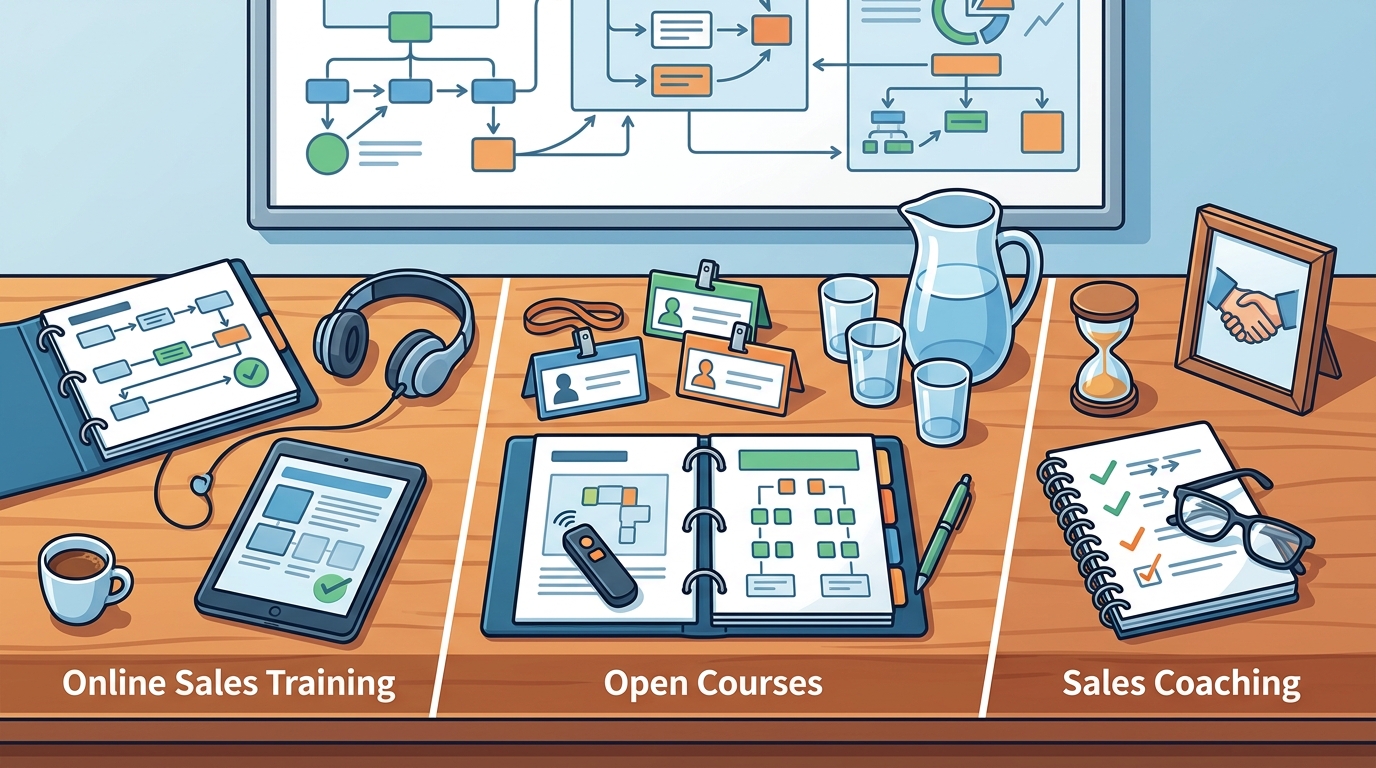
Before selecting a format, you must understand the landscape of available options. Sales training is not a monolith. It is a spectrum of methodologies designed to address different gaps in knowledge, skill, and behavior. The three primary modalities are open courses, bespoke in-house training, and virtual or blended learning programs. Each serves a distinct purpose in the sales development lifecycle. (Blog Impel Dynamic)
Open courses are designed for individual skill acquisition. They bring together professionals from various organizations to learn foundational or advanced techniques in a group setting. This format is ideal for individuals who need to benchmark their skills against industry peers. It fosters networking and exposes learners to diverse market perspectives. However, it lacks the contextual relevance required for complex B2B sales environments.
Bespoke in-house training is tailored specifically to your company's products, market, and customer personas. This format allows for deep customization of the curriculum. It addresses the specific pain points your team faces daily. The content is directly applicable to your sales cycle, ensuring immediate relevance. This approach is particularly effective for teams that need to align on a unified sales methodology.
Virtual and blended learning combines the flexibility of online modules with the interaction of live sessions. This modality is crucial for distributed teams or organizations with tight schedules. It allows for asynchronous learning, which respects the time of busy sales professionals. Blended models often yield higher retention rates by reinforcing concepts through multiple touchpoints.
Evaluating Your Organization's Needs
Choosing the right format begins with an honest assessment of your current state. You must ask difficult questions about your team's maturity, your budget, and your timeline. A one-size-fits-all approach rarely works in sales development. The goal is to identify the gap between where your team is and where they need to be.
Consider the complexity of your sales cycle. If you are selling high-value, complex solutions that require multiple stakeholders, standard open courses may not provide enough depth. You need a format that allows for deep-dive role-playing and scenario-based learning. In-house training allows you to use your actual deal files as case studies. This makes the learning tangible and immediately actionable.
Next, evaluate your team's geographic distribution. If your sales force is spread across different regions or countries, travel costs and time away from the desk become significant constraints. Virtual training eliminates these barriers. It ensures consistent messaging across all locations. However, virtual training requires a higher level of self-discipline from participants. You must assess whether your team has the maturity to engage effectively in a digital environment.
Finally, look at your budget and timeline. Bespoke programmes typically require a higher upfront investment. They take longer to design and deliver. However, they often yield a higher return on investment due to their specificity. Open courses are more cost-effective per head but may lack the strategic alignment needed for enterprise-level growth. Blended models offer a middle ground, allowing you to scale learning without sacrificing quality.
Comparing Delivery Methods: Pros and Cons
To make an informed decision, you must weigh the advantages and disadvantages of each delivery method. The table below summarizes the key characteristics of the primary training formats available to organizations today.
| Training Format | Best For | Key Advantage | Primary Constraint |
|---|---|---|---|
| Open Courses | Individual skill building, networking | Exposure to diverse market perspectives | Lack of company-specific context |
| In-House Bespoke | Team alignment, complex sales cycles | 100% tailored to your products and clients | Higher cost and scheduling complexity |
| Virtual Training | Distributed teams, tight schedules | Flexibility and lower logistical overhead | Requires high participant engagement |
| Blended Model | Long-term development, hybrid teams | Reinforcement of learning over time | Complexity in coordination |
When evaluating these options, remember that consultative selling is not just a technique. It is a mindset that requires consistent reinforcement. Open courses can introduce the concept, but only bespoke or blended formats can embed it into your team's daily behavior. According to industry data, teams that engage in ongoing development see significantly higher quota attainment rates than those relying on one-off events.
Bespoke Programmes vs. Standard Courses
The debate between bespoke and standard training is often framed as a cost decision. However, it is fundamentally a strategic choice. Standard courses offer breadth. They cover universal sales principles that apply across industries. Bespoke programmes offer depth. They address the unique nuances of your market and your customers.
Impel Dynamic specializes in bespoke sales programmes because we believe that true sales excellence requires customization. Our clients have closed deals ranging from $100,000 to $1,000,000 after engaging in tailored training. This is not a coincidence. It is the result of aligning the training content with the specific challenges your team faces. Standard courses cannot replicate this level of relevance.
Consider the sales fundamentals you need to strengthen. Are your reps struggling with cold calling? Or are they failing to navigate complex negotiations? A bespoke programme can target these specific areas. It can incorporate your actual sales scripts, your CRM workflows, and your customer personas. This level of detail is impossible to achieve in a standard course.
Furthermore, bespoke training fosters team cohesion. When your entire team learns together, they develop a shared language and a unified approach. This alignment is critical for scaling your sales organization. It ensures that every customer interaction reflects your brand's values and promises. Standard courses, by contrast, leave you with individuals who may have different interpretations of best practices.
Measuring ROI and Long-Term Impact
Investing in sales training is an investment in your company's future revenue. However, you must be able to measure its impact. ROI in sales training is not just about the immediate lift in deals closed. It is about the long-term change in behavior and capability.
Impel Dynamic reports a 6X average ROI for its clients. This figure is derived from the tangible results achieved by sales teams after completing our programmes. These results include increased win rates, shorter sales cycles, and higher deal values. To achieve similar results, you must define clear KPIs before the training begins. What specific behaviors do you want to see change? How will you track them?
Sales coaching is a critical component of long-term impact. Training is not a one-time event. It is a continuous process. Ongoing coaching helps reinforce the skills learned during the training. It provides real-time feedback and support. This ensures that the knowledge is retained and applied in the field. Without coaching, the decay of learning can be rapid.
Additionally, consider the leadership development aspect of your training. Your managers need to be equipped to coach their teams effectively. Tailored leadership training ensures that your managers understand the new sales methodology. They can then translate this knowledge into actionable guidance for their reps. This creates a multiplier effect, amplifying the impact of the initial training investment.
Key Takeaways
- Customization is Key: Bespoke sales training aligns directly with your company's specific products, market, and customer personas, ensuring immediate applicability.
- ROI Potential: Organizations engaging in tailored programmes have reported closing deals between $100,000 and $1,000,000, with an average ROI of 6X.
- Format Matters: Open courses are best for individual networking, while in-house training is superior for team alignment and complex sales cycles.
- Virtual Flexibility: Virtual and blended models are essential for distributed teams, offering flexibility without sacrificing engagement.
- Leadership Alignment: Tailored leadership training ensures managers can effectively coach their teams on new methodologies.
- Continuous Coaching: Sales coaching is critical for retaining learning and driving long-term behavioral change.
- Strategic Selection: Choose a training provider that understands your industry and can deliver measurable results, not just generic content.
Frequently Asked Questions
How do I choose between open courses and bespoke training?
Choose open courses if you need individual skill building and networking. Opt for bespoke training if you need team alignment and content tailored to your specific sales cycle.
What is the average ROI of sales training?
While ROI varies by industry, tailored programmes often yield significant returns. Impel Dynamic reports an average ROI of 6X for its clients through increased deal values and win rates.
Can virtual training be as effective as in-person training?
Yes, virtual training can be highly effective, especially for distributed teams. Blended models that combine virtual modules with live sessions often yield the best results.
How long does a bespoke sales programme take?
Bespoke programmes can range from 1 to 5 days of intensive training. They can also be structured as ongoing programmes to ensure long-term adoption and behavior change.
What is consultative selling?
Consultative selling is a customer-centric approach that focuses on identifying the client's deepest challenges and matching them to the perfect solution, rather than just pushing a product.
How does sales coaching support training?
Sales coaching reinforces the skills learned during training by providing real-time feedback and support. It ensures that knowledge is retained and applied in the field.
Why is leadership training important for sales teams?
Leadership training equips managers with the tools to coach their teams effectively. It ensures that the sales methodology is consistently applied across the organization.
Next Steps
Matching sales training formats to your organization's needs is a strategic decision that can drive significant growth. By understanding your team's challenges and choosing the right delivery method, you can build a sales force that delivers consistent results. Impel Dynamic is ready to help you design a programme that fits your unique requirements. Contact us today to discuss your needs and explore how we can help you win more business.