

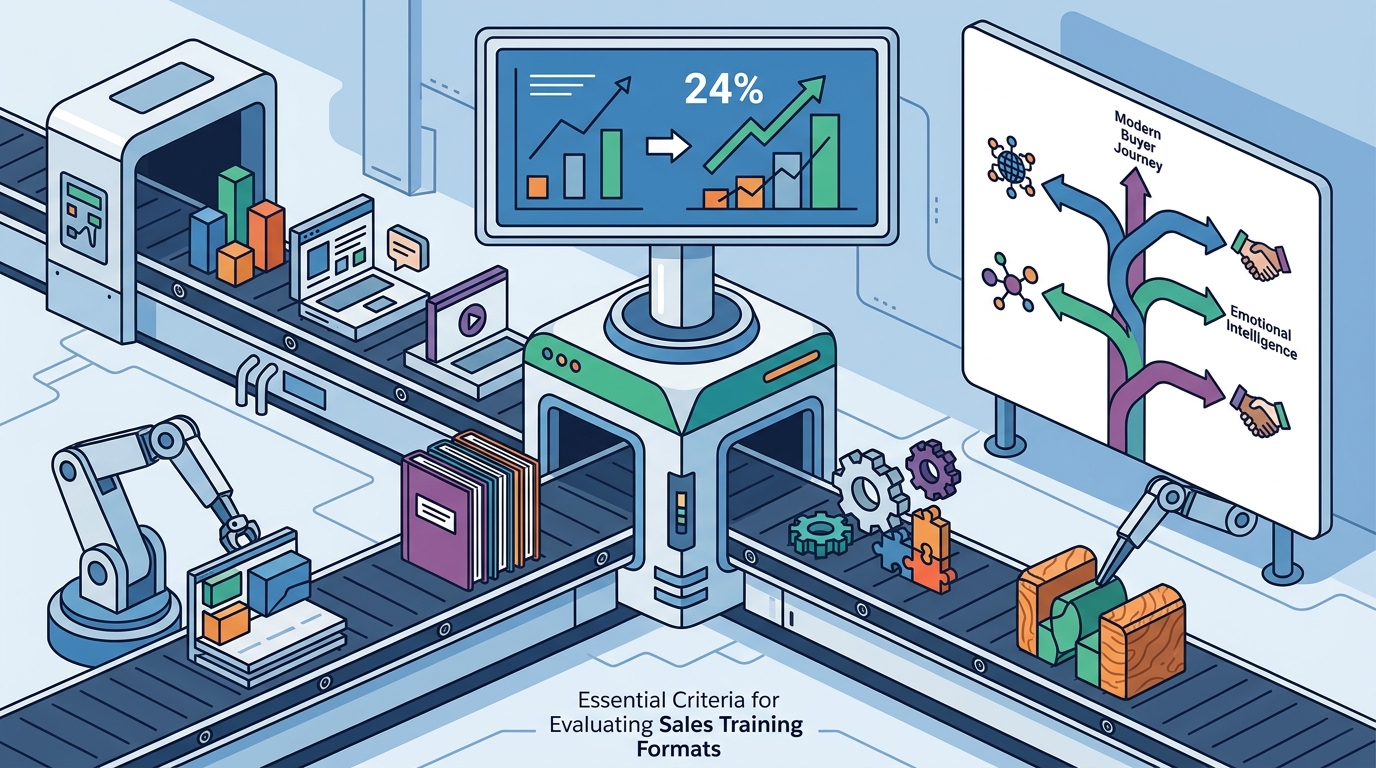
Sales training is no longer a one-size-fits-all commodity. According to recent industry analysis, organizations that implement structured, multi-modal learning frameworks see a 24% higher retention rate of sales techniques compared to those relying on single-format interventions. This statistic underscores a critical shift in how enterprises approach capability building. The modern buyer journey is complex, requiring sales teams to master digital fluency, emotional intelligence, and strategic negotiation simultaneously. Consequently, selecting the right training format is not merely an administrative decision but a strategic imperative that directly impacts revenue velocity and team morale. (Other Core Services Impel)
Understanding Training Delivery Models
The landscape of sales education has expanded far beyond the traditional classroom. Today, organizations must navigate a spectrum of delivery methods, each with distinct advantages and limitations. The core formats generally fall into three categories: in-person, virtual, and blended. Each model serves a specific purpose in the learning lifecycle. (Sales Training Courses amp)
In-Person Sales Programmes
Face-to-face training remains the gold standard for high-stakes skill acquisition. Face-to-face sales programme delivery allows for immediate feedback, role-playing with real-time correction, and the building of interpersonal rapport among team members. This format is particularly effective for complex topics such as consultative selling and advanced negotiation. The physical presence of a trainer enables the observation of non-verbal cues, which is critical when teaching body language and confidence building. However, the logistical costs and time away from the desk can be significant barriers for distributed teams. (Blog Impel Dynamic)
Virtual and Online Sales Training
Virtual training has evolved from a pandemic necessity to a strategic staple. Online sales training offers unparalleled scalability and flexibility. It allows sales professionals to learn at their own pace, revisiting complex modules as needed. This format is ideal for foundational knowledge, product updates, and soft skills that can be demonstrated through digital simulations. The ability to record sessions also creates a searchable knowledge base for future reference. Yet, virtual environments require disciplined facilitation to prevent disengagement and ensure active participation.
The Blended Model
The blended model combines the depth of in-person interaction with the flexibility of digital learning. This approach typically involves self-paced online modules for theory, followed by live virtual or in-person workshops for practice and application. Blended model training maximizes ROI by reducing travel costs while maintaining high levels of engagement. It supports a continuous learning culture, where development is an ongoing process rather than a one-time event. This hybrid approach is increasingly becoming the preferred choice for mature sales organizations seeking sustainable growth.
Evaluating Engagement and Retention
Choosing a format is only half the battle. The true test lies in how well the content is retained and applied. Engagement metrics must be evaluated not just during the training, but in the weeks and months following completion.
Research indicates that passive learning, such as watching a lecture without interaction, yields low retention rates. Active learning strategies, including role-plays, case studies, and peer discussions, significantly enhance memory consolidation. When evaluating a training provider, ask about their methodology for ensuring active participation. Do they use gamification? Do they incorporate real-world scenarios from your specific industry? The best training formats are those that mirror the actual selling environment, forcing participants to apply concepts immediately.
Furthermore, consider the cognitive load of the format. In-person sessions can be intense but immersive. Virtual sessions can be fragmented if not well-structured. A well-designed blended approach can manage cognitive load by spacing out learning over time, allowing for reflection and practice between sessions. This spacing effect is crucial for long-term skill acquisition in sales, where consistency is key to habit formation.
Customization vs. Standardization
One of the most critical criteria for evaluation is the level of customization offered. Generic training programs often fail to address the unique challenges of a specific organization. Customised Sales Training ensures that the content resonates with your team’s current knowledge level and specific market context.
Standardized open courses are valuable for individuals looking to network and gain broad industry insights. They provide a common language and foundational skills that can be shared across the organization. However, for organizational transformation, bespoke programs are superior. A bespoke approach involves a deep diagnostic phase where trainers analyze your current sales processes, identify gaps, and tailor the curriculum to address those specific needs. This ensures that the training is not just theoretical but directly applicable to your daily operations.
When evaluating formats, consider the trade-off between cost and impact. Open courses are cost-effective for upskilling individuals. Bespoke programs require a higher investment but deliver a significantly higher return by addressing precise business challenges. The decision should be driven by the strategic importance of the skills being taught and the size of the audience.
ROI and Measurement Frameworks
Justifying the investment in sales training requires a clear framework for measuring return on investment (ROI). Many organizations struggle to quantify the impact of training initiatives. A robust evaluation framework must go beyond simple satisfaction surveys to measure behavioral change and business results.
The Kirkpatrick Model is a widely accepted standard for training evaluation. It consists of four levels: Reaction, Learning, Behavior, and Results. Level 1 measures participant satisfaction. Level 2 assesses knowledge acquisition. Level 3 evaluates the application of skills on the job. Level 4 ties the training to business outcomes such as increased revenue, shorter sales cycles, or higher win rates. When selecting a training format, ensure the provider offers tools and support for measuring at all four levels.
Impel Dynamic, for instance, reports a 6X average ROI for their clients, demonstrating the tangible impact of their strategic approach. This metric is derived from tracking the performance of sales teams before and after training interventions. Look for providers who can share similar case studies and data points. They should be able to articulate how they measure success and how they help clients translate learning into revenue. Without this focus on measurable outcomes, training risks becoming an expense rather than an investment.
Comparison of Training Formats
To assist in your decision-making process, the following table compares the primary sales training formats across key evaluation criteria. This comparison highlights the strengths and weaknesses of each model to help you align your choice with your organizational goals.
| Training Format | Best For | Engagement Level | Scalability | Cost Efficiency | Key Benefit |
|---|---|---|---|---|---|
| In-Person | Complex skills, team building | Very High | Low | Medium | Immediate feedback and rapport |
| Virtual Live | Distributed teams, quick updates | High | High | High | Flexibility and accessibility |
| Blended | Long-term development, culture change | High | Medium | Medium | Sustained behavior change |
| Bespoke Programmes | Strategic alignment, specific gaps | Very High | Low | Low | Direct business impact |
Key Takeaways
- Strategic Alignment: Training format must align with your sales methodology and business objectives, not just logistical convenience.
- Retention Matters: Blended learning models often yield the highest long-term retention by combining theory with practice.
- Customization is Key: Bespoke programs address specific organizational gaps more effectively than off-the-shelf solutions.
- Measure Outcomes: Always require providers to demonstrate how they measure ROI beyond satisfaction scores.
- Scalability vs. Depth: Virtual formats offer scalability, while in-person formats offer depth; choose based on your immediate needs.
- Expertise Verification: Look for providers with a proven track record, such as Impel Dynamic’s 25+ years of experience and 99% client satisfaction.
- Continuous Improvement: Training should be part of an ongoing development plan, not a one-off event.
Frequently Asked Questions
What is the most effective sales training format for remote teams?
For remote teams, a blended model is often the most effective. It combines self-paced online modules for foundational knowledge with live virtual workshops for interactive practice. This approach maintains engagement while accommodating geographical dispersion.
How do I measure the ROI of sales training?
ROI is measured by comparing the financial gains from improved sales performance against the cost of the training. This involves tracking metrics such as win rates, average deal size, and sales cycle length before and after the training intervention.
Is bespoke sales training worth the higher cost?
Bespoke training is worth the investment when your organization has specific, complex challenges that generic programs cannot address. It ensures that the content is directly relevant to your market and customers, leading to faster and more significant results.
What is the difference between sales coaching and sales training?
Sales training focuses on imparting knowledge and skills through structured learning. Sales coaching is a continuous, one-on-one process that helps individuals apply these skills in real-time, providing feedback and guidance to improve performance.
Can virtual training be as effective as in-person training?
Yes, virtual training can be equally effective, particularly for knowledge-based learning and skill practice. The key is active facilitation and interactive elements that keep participants engaged. However, for building deep interpersonal trust, in-person interaction may still be superior.
How long should a sales training program last?
The duration depends on the complexity of the skills and the format. Intensive in-person workshops may last 1-5 days, while ongoing development programs can span several months. Blended programs often combine short bursts of learning with extended application periods.
What role does leadership play in sales training success?
Leadership support is critical. Managers must reinforce training concepts, provide opportunities for practice, and model the desired behaviors. Without leadership buy-in, even the best training programs can fail to drive behavioral change.
Next Steps
Evaluating sales training formats is a strategic decision that requires careful consideration of your team’s needs, your business goals, and the available resources. By focusing on engagement, customization, and measurable ROI, you can select a format that drives real results. If you are ready to transform your sales performance, consider exploring our Bespoke Sales Programmes or booking a call to discuss your specific challenges. Our team of experts is ready to help you design a training solution that delivers immediate impact and long-term growth. Visit our Contact page to get started.