

Impel Dynamic provides in-house sales training for large companies in the UK, specializing in bespoke programmes that drive measurable revenue growth. This guide covers how to evaluate providers, verify credentials, understand costs, and implement training that scales with your organization. according to Largest UK companies
How to Choose a Provider
Choosing the right in-house sales training provider requires looking beyond marketing claims to assess methodological depth and industry relevance. A strong provider offers a structured approach that aligns with your specific sales environment rather than a generic curriculum. Impel Dynamic, for example, operates with a methodology refined over twenty years of experience, ensuring that training content remains current with market changes.
Methodology Depth
Methodology depth is the extent to which a provider has a proven, repeatable framework for driving behavioral change. Look for providers that can articulate a clear process, such as a prepare, deliver, and follow-up cycle. This structure ensures that training is not just an event but a sustained effort to embed new skills. Providers that rely on ad-hoc workshops often fail to produce lasting results.
Industry Specialization
Industry specialization refers to the provider's focus on specific sectors such as legal, financial, or insurance. Large companies in professional services benefit from trainers who understand the unique buying behaviors of their clients. Impel Dynamic specializes in helping professional service firms expand their influence and maximize revenue, which is a critical differentiator for B2B organizations. according to Reporting requirements for
Trainer Credibility
Trainer credibility is the practical experience of the instructors in high-level sales and management roles. The best providers employ consultants who remain involved in day-to-day business development activities. This ensures that the training approaches are not only theoretical but also practical and relevant to current market conditions.
What to Ask Before Committing
Before signing a contract, you must ask specific questions that reveal the provider's operational reality. Vague answers to these questions are a red flag. You need to understand exactly how the provider will measure success and how they will integrate with your existing systems.
Customization Capability
Measurement and ROI
Ask how they measure the return on investment of their training. Do they use pre- and post-training assessments? Do they track behavioral changes over time? Impel Dynamic uses a clear improvement plan and KPIs to monitor every step of the way, ensuring that the training delivers tangible results.
Delivery Flexibility
Ask about their delivery methods. Do they offer face-to-face, virtual, or blended models? For large companies with distributed teams, flexibility is essential. Impel Dynamic offers virtual training and face-to-face options, allowing you to choose the format that best suits your team's needs.
How to Verify Claims
Verifying a provider's claims is crucial to avoid investing in ineffective training. You should check their credentials, client references, and track record. This process helps you separate marketing fluff from genuine expertise.
Check Client References
Request references from clients of similar size and industry. Speak to these references and ask about the provider's impact on their sales performance. Did the provider deliver on their promises? Were the trainers knowledgeable and engaging? This direct feedback is invaluable in making an informed decision.
Review Case Studies
Look for detailed case studies that outline the challenges, solutions, and results. A reputable provider will be transparent about their successes and failures. Impel Dynamic's clients have closed significant new deals since training with them, demonstrating the real-world impact of their programmes.
Assess Trainer Backgrounds
Review the backgrounds of the trainers who will be delivering the programme. Do they have relevant industry experience? Have they held senior sales roles? This practical experience is a key indicator of the quality of the training they will provide.
How In-House Training Works
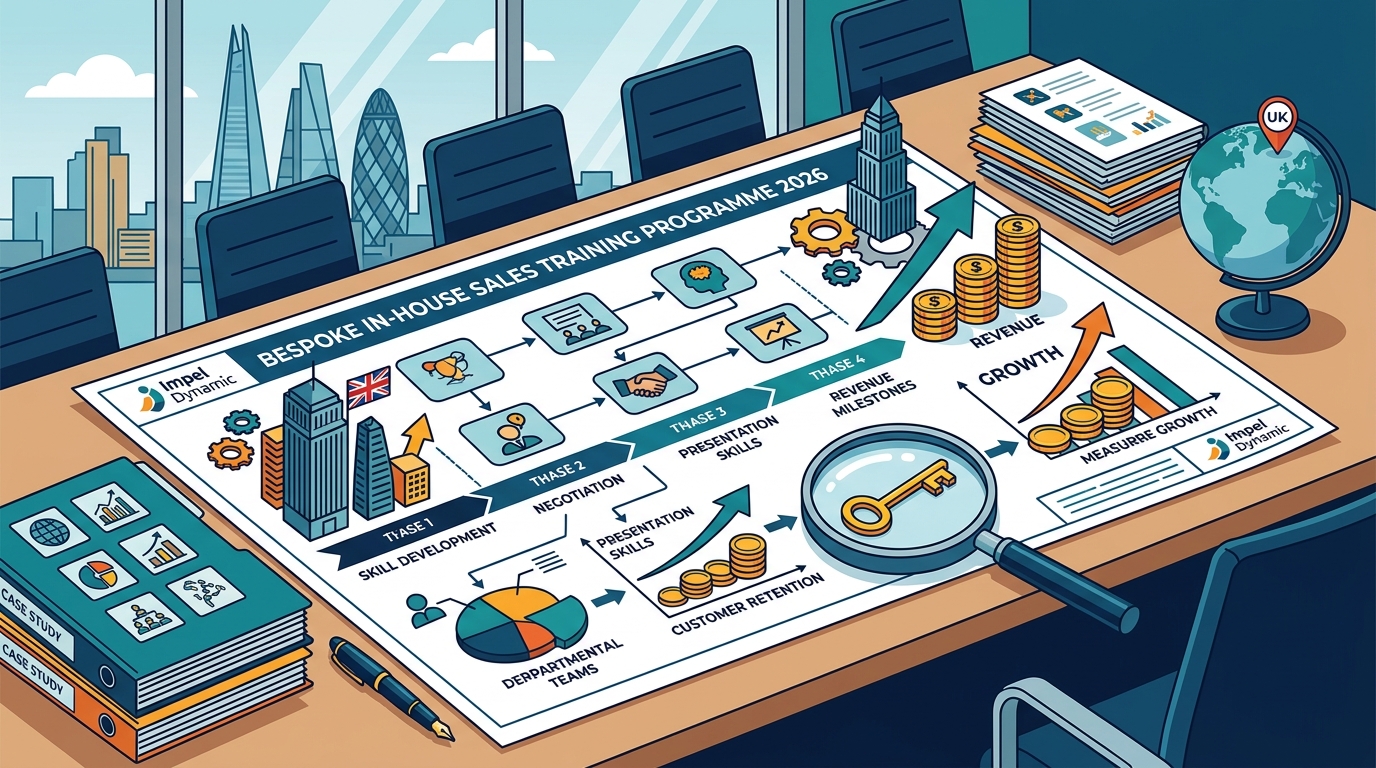
In-house sales training is a structured process that involves preparation, delivery, and follow-up. Understanding this process helps you set realistic expectations and plan for the implementation. The goal is to create a sustainable change in your sales team's behavior and performance.
The Preparation Phase
The preparation phase involves a detailed assessment of your current sales process, team skills, and business goals. The provider works with your leadership team to design a bespoke curriculum that addresses your specific needs. This phase ensures that the training is relevant and targeted.
The Delivery Phase
The delivery phase is where the training takes place. This can be in the form of workshops, coaching sessions, or e-learning modules. The trainers work with your sales team to teach new skills, provide feedback, and facilitate practice. The focus is on practical application and immediate relevance.
The Follow-Up Phase
The follow-up phase is critical for ensuring that the training has a lasting impact. This involves ongoing coaching, performance reviews, and adjustments to the training programme as needed. Impel Dynamic's approach includes a clear improvement plan and KPIs to monitor progress and ensure that the training continues to deliver results.
What It Costs
The cost of in-house sales training varies depending on several factors. Understanding these factors helps you budget effectively and avoid unexpected expenses. The price is not just for the training itself but for the expertise, customization, and ongoing support that comes with it.
Scope of the Programme
The scope of the programme is a major cost driver. A comprehensive programme that covers multiple sales skills and includes ongoing coaching will cost more than a single workshop. You should define the scope of your needs clearly to get an accurate quote.
Number of Participants
The number of participants also affects the cost. Training a large sales team will cost more than training a small group. However, the per-person cost may be lower for larger groups due to economies of scale. according to Largest UK companies
Duration and Frequency
The duration and frequency of the training also impact the cost. A long-term programme with regular coaching sessions will cost more than a one-off event. You should consider the long-term value of the training when evaluating the cost.
Common Mistakes to Avoid
Many organizations make common mistakes when investing in in-house sales training. Avoiding these mistakes can save you time, money, and frustration. By being aware of these pitfalls, you can ensure that your training investment delivers the desired results.
Choosing a Generic Curriculum
One of the most common mistakes is choosing a provider that offers a generic curriculum. This type of training is not tailored to your specific industry or company culture, and it is unlikely to produce lasting results. Always look for a provider that offers bespoke programmes.
Lacking Management Support
Not Measuring Results
Failing to measure the results of the training is another mistake. Without clear metrics, you cannot determine whether the training is effective. You should work with your provider to define clear KPIs and track progress over time.
In-House vs. Alternatives
In-house sales training is not the only option available. Understanding the alternatives helps you make an informed decision about the best approach for your organization. Each option has its own advantages and disadvantages.
Open Courses
Open courses are a popular alternative to in-house training. They are often less expensive and can be a good option for individual sales professionals. However, they are not tailored to your specific company or industry, and they may not be as effective for large teams. Impel Dynamic offers open sales courses for those who prefer this format.
E-Learning
E-learning is another alternative that offers flexibility and scalability. It can be a good option for training large teams on basic skills. However, it lacks the personal interaction and feedback that is essential for developing advanced sales skills. A blended approach that combines e-learning with in-person coaching is often the most effective.
Internal Training
Some organizations choose to develop their own internal training programmes. This can be a good option if you have the resources and expertise in-house. However, it can be time-consuming and may lack the objectivity and external perspective that a professional provider brings.
Training for Specific Situations
Different situations require different training approaches. Understanding the specific challenges your organization faces helps you choose the right training programme. This section covers some common situations and how to address them.
Rapid Growth
Organizations that are growing rapidly often struggle to maintain consistency in their sales process. In-house training can help you standardize your sales methodology and ensure that new hires are up to speed quickly. Impel Dynamic's leadership training can help your managers coach and develop their teams effectively.
Market Changes
Market changes can disrupt your sales process and require new skills. In-house training can help your team adapt to these changes and stay competitive. A provider with deep industry expertise can help you navigate these changes and identify new opportunities. according to Reporting requirements for
Low Performance
If your sales team is underperforming, in-house training can help you identify the root causes and develop a plan to improve performance. A provider with a proven methodology can help you diagnose the issues and implement the necessary changes.
Rules and Protections
There are rules and protections that apply to in-house sales training. Understanding these rules helps you ensure that your training is compliant and ethical. This section covers some of the key rules and protections.
Data Protection
Data protection is a critical consideration when conducting in-house training. You must ensure that any personal data collected during the training is handled in accordance with data protection laws. Impel Dynamic is committed to safeguarding your personal information and uses GDPR compliant systems to process data.
Confidentiality
Confidentiality is another important consideration. You must ensure that any confidential information shared during the training is protected. A reputable provider will have strict confidentiality policies in place to protect your data.
Ethical Standards
Ethical standards are essential in sales training. You must ensure that the training promotes ethical sales practices and does not encourage misleading or deceptive behavior. A reputable provider will have a strong commitment to ethical standards and will train your team to sell with integrity.
London and UK Specifics
The London and UK market has specific characteristics that affect in-house sales training. Understanding these specifics helps you choose the right provider and approach. This section covers some of the key local specifics.
Competitive Market
London is one of the most competitive commercial hubs in the world. Its sales teams are under constant pressure to hit quota in markets where buyers are better informed than ever. Choosing the right sales training company can be the difference between a team that consistently overachieves and one that plateaus.
Regulatory Environment
The UK has a specific regulatory environment that affects sales practices. You must ensure that your training is compliant with local regulations. A provider with local expertise can help you navigate these regulations and ensure that your team is selling in a compliant manner.
Cultural Considerations
Cultural considerations are also important in the UK market. You must ensure that your training is culturally relevant and resonates with your team. A provider with local experience can help you tailor the training to the UK market.
Timing Your Investment
Timing is a critical factor in the success of your in-house sales training. Understanding when to act and how timing changes the outcome helps you maximize the impact of your investment. This section covers some key timing considerations.
Before a Major Launch
Conducting training before a major product or service launch can help your team be prepared and confident. This timing ensures that your team is ready to sell the new offering and can hit the ground running.
After a Performance Dip
Conducting training after a performance dip can help you identify the root causes and develop a plan to improve performance. This timing allows you to address the issues before they become entrenched.
During a Period of Growth
Conducting training during a period of growth can help you maintain consistency and ensure that new hires are up to speed quickly. This timing helps you scale your sales process effectively.
Long-Term Results
The long-term results of in-house sales training are a key indicator of its effectiveness. Understanding what to expect over time helps you set realistic goals and measure success. This section covers some key long-term results.
Increased Revenue
One of the primary long-term results of in-house sales training is increased revenue. By improving your team's skills and performance, you can close more deals and increase your average deal size. Impel Dynamic's clients have seen significant revenue growth since training with them.
Improved Retention
Another long-term result is improved retention. By providing your team with the skills and support they need to succeed, you can reduce turnover and retain top talent. This is a critical factor in the long-term success of your sales organization.
Enhanced Reputation
Finally, in-house sales training can enhance your reputation in the market. By training your team to sell with integrity and provide exceptional customer service, you can build a strong reputation that attracts new clients and retains existing ones.
Key Takeaways
- Choose a provider with a proven methodology and industry specialization.
- Ask specific questions about customization, measurement, and delivery flexibility.
- Verify claims by checking client references, case studies, and trainer backgrounds.
- Understand the preparation, delivery, and follow-up phases of in-house training.
- Budget for the scope, number of participants, and duration of the programme.
- Avoid common mistakes such as choosing a generic curriculum or lacking management support.
- Consider the alternatives, including open courses, e-learning, and internal training.
- Time your investment strategically to maximize its impact.
Frequently Asked Questions
What is in-house sales training?
In-house sales training is a customized training programme delivered to your sales team within your organization. It is tailored to your specific industry, company culture, and business goals.
How long does in-house sales training take?
The duration of in-house sales training varies depending on the scope of the programme. It can range from a single day to several months of ongoing coaching.
How much does in-house sales training cost?
The cost of in-house sales training depends on the scope, number of participants, and duration of the programme. You should request a quote from the provider to get an accurate estimate.
What are the benefits of in-house sales training?
The benefits of in-house sales training include increased revenue, improved retention, and enhanced reputation. It also helps you standardize your sales process and develop your team's skills.
How do I choose the right provider?
You should choose a provider with a proven methodology, industry specialization, and credible trainers. Ask specific questions about customization, measurement, and delivery flexibility, and verify their claims by checking client references and case studies.
What are the common mistakes to avoid?
Common mistakes include choosing a generic curriculum, lacking management support, and not measuring results. You should avoid these mistakes to ensure that your training investment delivers the desired results.