

From Skill-Building to Loyalty: How Sales Training Retains Clients and Talent
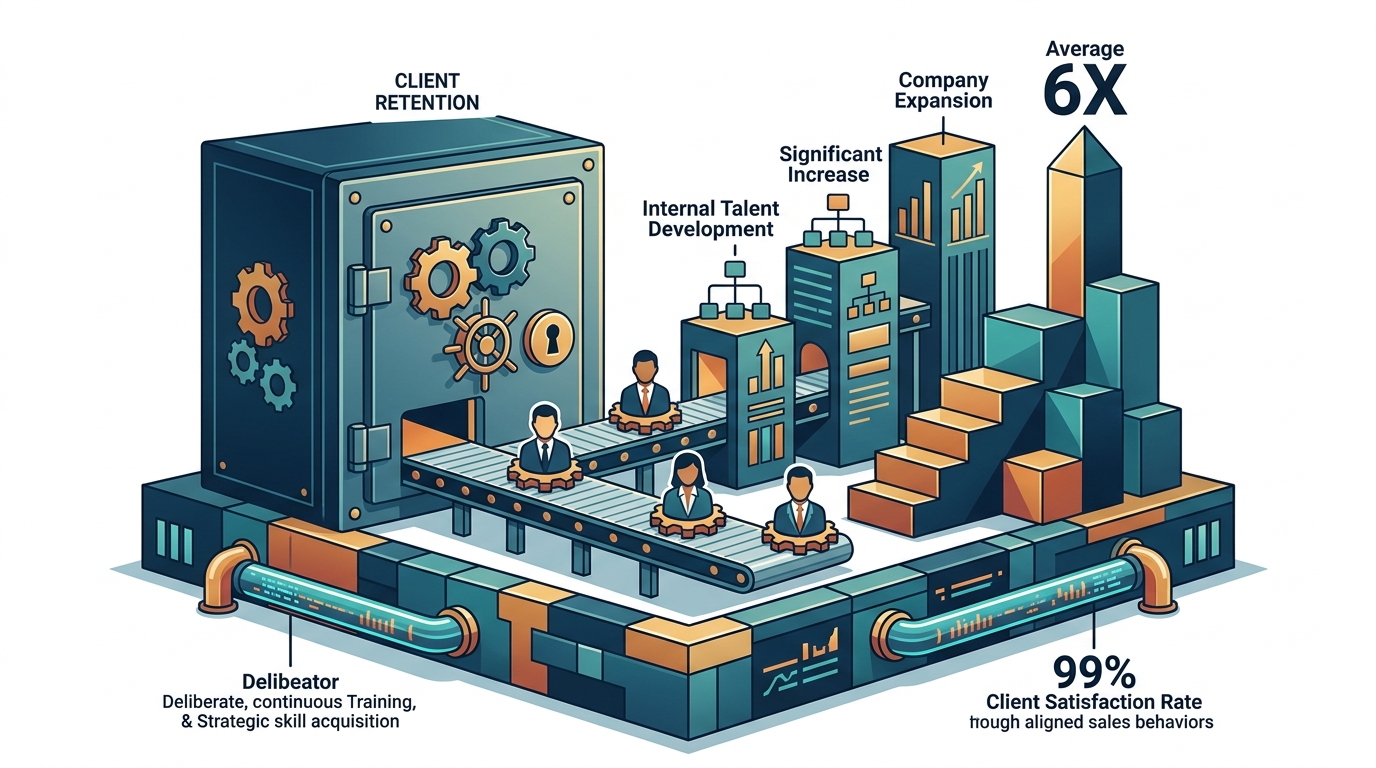
Businesses that invest in structured sales development see a 99% client satisfaction rate and an average 6X return on investment. This is not accidental. It is the result of deliberate, continuous training that aligns sales behaviors with long-term client success. When organizations prioritize skill acquisition over quick wins, they build a resilient foundation for both revenue stability and workforce expansion.
Why Client Retention Drives Growth
Client retention is the silent engine of sustainable business growth. Acquiring a new customer costs significantly more than keeping an existing one. Sales training directly impacts this metric by equipping teams with the empathy, strategic thinking, and technical knowledge required to navigate complex client needs.
When sales professionals are trained to listen actively and solve problems rather than just push products, trust is established. This trust leads to longer contract durations and higher lifetime value. According to industry data, a 5% increase in customer retention can increase profits by 25% to 95%. This statistic highlights the financial imperative of investing in human capital.
Impel Dynamic emphasizes a tailored framework that prepares teams for the future. By meeting clients at their current knowledge level, training programs ensure that sales staff can adapt to evolving market demands. This adaptability is crucial for maintaining relationships in a fast-paced business environment.
Core Training Methodologies
Effective sales training is not a one-time event. It is a continuous process that evolves with the organization. There are several key methodologies that drive results.
Bespoke Sales Programmes
Bespoke sales programmes are designed to fit the specific selling environment of a company. Generic training often fails because it does not address unique industry challenges. A tailored approach ensures that the content is relevant and immediately applicable. This leads to impact from day one, reducing the time to productivity for new hires.
These programmes can range from one to five days of intensive training. They are followed by ongoing support to reinforce learning. This structure allows companies to enhance vital areas of their sales process, such as negotiation, closing, or account management.
Virtual and In-House Training
Flexibility is key in modern sales training. Virtual training options allow teams to learn from anywhere, reducing travel costs and time away from the office. In-house training provides a customized experience that addresses specific team dynamics and company culture. Both methods are effective when delivered by experienced professionals who understand the nuances of sales psychology.
Leadership coaching is another critical component. It helps management teams standardize sales methodology across a growing organization. This standardization ensures consistency in client interactions, which is vital for brand reputation and client trust.
Growing the Talent Pool
Sales training is not just about improving current performance. It is also about attracting and retaining top talent. High-performing sales professionals seek environments where they can grow. Companies that offer robust training programs are more attractive to these individuals.
When employees see a clear path for development, they are more likely to stay. This reduces turnover costs and preserves institutional knowledge. A stable sales team is more confident and effective in client interactions. This stability creates a positive feedback loop that enhances overall business performance.
Impel Dynamic offers tailored leadership and management training to support this growth. By developing internal leaders, companies can create a pipeline of future sales managers. This internal promotion strategy boosts morale and reduces the need for external hiring.
Furthermore, training programs that focus on soft skills, such as communication and emotional intelligence, help build a more cohesive team. These skills are essential for collaboration and innovation. Teams that work well together are more likely to share best practices and support each other in achieving goals.
Comparing Training Approaches
Choosing the right training approach depends on your specific needs. Below is a comparison of common sales training options.
| Training Type | Best For | Key Benefit | Duration |
|---|---|---|---|
| Bespoke Sales Programmes | Companies with unique challenges | Highly relevant content | 1-5 days + ongoing |
| Leadership Training | Management teams | Standardized methodology | Variable |
| Virtual Training | Distributed teams | Flexibility and cost savings | Flexible |
| In-House Training | Team cohesion | Customized culture fit | Variable |
Key Takeaways
- ROI Impact: Structured sales training delivers an average 6X return on investment for participating businesses.
- Client Satisfaction: Impel Dynamic reports a 99% client satisfaction rate due to its tailored approach.
- Retention Link: A 5% increase in customer retention can increase profits by 25% to 95%.
- Talent Attraction: Companies with robust training programs are more attractive to top sales talent.
- Leadership Standardization: Leadership coaching helps standardize sales methodology across growing organizations.
- Immediate Application: Bespoke programs are designed for impact from day one, reducing ramp-up time.
- Long-Term Growth: Continuous training is essential for adapting to market changes and maintaining competitive advantage.
Frequently Asked Questions
How does sales training improve client retention?
Sales training improves client retention by teaching professionals how to build trust, solve problems, and communicate value effectively. This leads to stronger relationships and higher customer satisfaction.
What is the difference between bespoke and open sales courses?
Bespoke sales courses are tailored to a company's specific needs and challenges, while open courses cover general sales principles. Bespoke programs offer more immediate relevance and impact.
Can virtual training be as effective as in-person training?
Yes, virtual training can be highly effective, especially for distributed teams. It offers flexibility and cost savings while still delivering high-quality content and interaction.
How does leadership coaching support sales teams?
Leadership coaching helps managers standardize sales methodology, provide better feedback, and support their teams in achieving goals. This creates a more cohesive and effective sales organization.
What is the average ROI of sales training?
According to industry data, the average ROI of sales training is 6X. This means that for every dollar spent on training, businesses see six dollars in return.
How long does a bespoke sales programme last?
Bespoke sales programmes typically last between one to five days, followed by ongoing support and reinforcement. The exact duration depends on the specific needs of the organization.
Why is continuous training important for sales teams?
Continuous training is important because the sales landscape is constantly changing. Ongoing learning ensures that teams stay up-to-date with new tools, techniques, and market trends.
How can I get started with sales training?
You can get started by contacting a training provider to discuss your specific needs. They can help you design a program that addresses your unique challenges and goals.
Next Steps
Ready to transform your sales team and grow your business? Contact Impel Dynamic today to discuss your needs. We offer tailored sales training programs that deliver immediate results. Get a Quote or Book a Call to start your journey to sales excellence.