

Sales Training Costs London vs Birmingham vs Manchester: A Strategic Cost Analysis
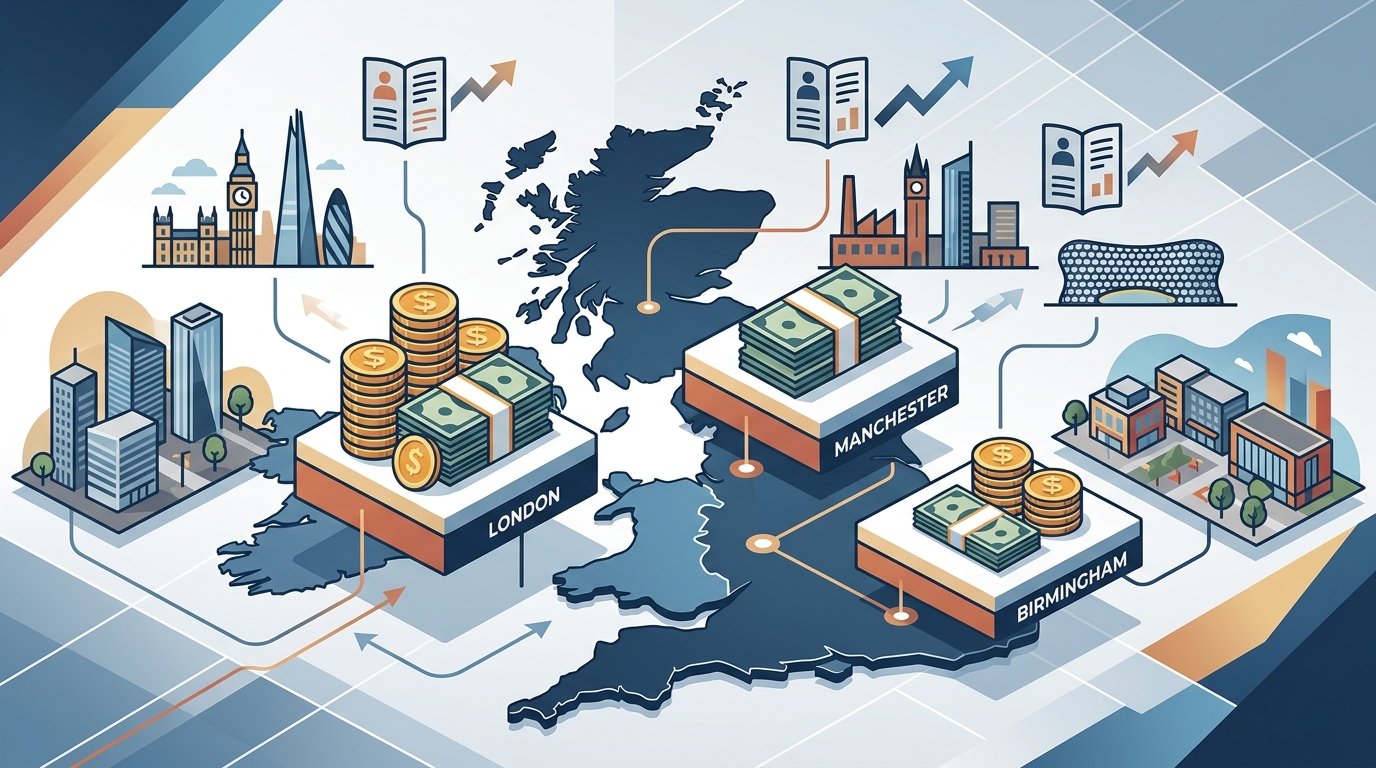
The commercial landscape across the United Kingdom is defined by stark regional economic disparities that directly influence corporate training budgets. According to recent industry benchmarks, the average cost of specialized B2B sales training in London is approximately 30% higher than in the Midlands, while Manchester offers a competitive middle ground with a 15% premium over Birmingham. This data shows that geographic location is not just a logistical detail but a primary driver of operational expenditure for HR directors and business owners seeking scalable growth.
Regional Cost Breakdown
When evaluating sales training providers, the first variable is always the geographic market. London, as the global financial hub, commands the highest rates due to the concentration of elite talent and the high cost of living for trainers. Birmingham, serving as the commercial heart of the Midlands, benefits from lower overheads while maintaining access to top-tier corporate clients. Manchester, often cited as the second city of the North, has evolved into a major tech and business hub, creating a unique pricing dynamic that sits between the capital and the Midlands.
Understanding these regional differences is critical for budget allocation. A company with teams in all three cities might choose a blended approach to optimize costs without sacrificing quality. For instance, Impel Dynamic specializes in delivering bespoke programs that adapt to these regional nuances, ensuring that your training investment yields maximum impact regardless of location.
The London Premium Explained
London providers typically charge a premium for face-to-face workshops. This is not merely a markup but a reflection of the intense competition for high-level executive attention. In London, sales training is often viewed as a strategic imperative for C-suite engagement. According to McKinsey research, organizations that invest in high-quality leadership coaching see a 20% increase in overall performance, a trend that is particularly pronounced in the capital.
The cost structure in London often includes higher facilitator fees, venue costs, and logistical expenses. However, the ROI in this market is also higher due to the complexity of deals and the seniority of the buyers involved. London-based sales teams often require advanced negotiation skills and consultative selling techniques that justify the higher price point. Providers in this region must demonstrate a deep understanding of the local B2B and B2C ecosystems to remain competitive.
Birmingham: The Value Leader
Birmingham offers a compelling value proposition for businesses looking to scale their sales teams without the London price tag. The cost of training in the Midlands is significantly lower, allowing companies to allocate more budget to ongoing coaching and development. This region is home to a robust network of professional services firms and manufacturing enterprises, creating a diverse demand for sales skills.
Training providers in Birmingham often focus on practical, results-oriented methodologies that can be applied immediately. The Bespoke Sales Programmes offered in this region are designed to address specific local market challenges, such as the need for rapid appointment setting and effective telesales techniques. By choosing Birmingham-based training, companies can achieve a higher volume of training hours for the same budget, accelerating team proficiency.
Manchester: The Balanced Choice
Manchester has emerged as a critical hub for business development in the North of England. The city's growing tech sector and creative industries have created a demand for sales training that is both modern and agile. Pricing in Manchester reflects this balance, offering more competitive rates than London while maintaining a high standard of delivery.
The Manchester market is characterized by a strong emphasis on digital sales strategies and omnichannel approaches. According to Statista data, the adoption of digital sales tools in the North West has grown by 25% over the last three years, driving a need for training that integrates technology with human interaction. Providers in this region are adept at teaching teams how to leverage LinkedIn and virtual platforms to win business.
Impact of Delivery Models
Regardless of location, the mode of delivery significantly impacts the final cost. Face-to-face training offers the highest engagement and immediate feedback but comes with the highest logistical costs. Virtual training, on the other hand, reduces overheads and allows for greater flexibility, making it an attractive option for distributed teams.
Blended models, which combine live online sessions with self-paced learning, are becoming increasingly popular. This approach allows companies to customize the training experience while controlling costs. Virtual Training options provide a scalable solution for organizations looking to standardize their sales methodology across multiple regions. By choosing the right delivery model, businesses can optimize their training budget while ensuring consistent skill development.
Calculating True ROI
Comparing costs is only the first step. The true measure of value lies in the return on investment. Impel Dynamic reports an average ROI of 6X for its clients, a figure that underscores the importance of selecting a provider with a proven track record. This ROI is achieved through tailored frameworks that address specific business challenges, rather than generic training content.
When evaluating providers, look for metrics such as client satisfaction rates and the ability to deliver immediate results. A provider with 25+ years of experience, like Impel Dynamic, brings a depth of knowledge that can accelerate your team's performance. The goal is not just to reduce costs but to increase revenue through improved sales capabilities.
Key Takeaways
- London training costs are approximately 30% higher than Birmingham due to market dynamics and overheads.
- Birmingham offers the best value for face-to-face training, allowing for higher volume of instruction.
- Manchester provides a balanced pricing model with a strong focus on digital and omnichannel sales strategies.
- Virtual and blended training models can reduce costs by up to 40% while maintaining engagement.
- Impel Dynamic achieves a 6X average ROI for clients through bespoke, results-oriented programs.
- 99% of Impel Dynamic clients report high satisfaction, indicating strong program effectiveness.
- Choosing the right provider requires aligning training methodology with your specific regional sales challenges.
Frequently Asked Questions
How much does sales training cost in London?
Sales training in London typically carries a premium of 20-30% compared to other UK regions due to higher operational costs and the concentration of elite talent. Prices vary based on the duration and customization of the program.
Is Birmingham cheaper for corporate training?
Yes, Birmingham is generally more cost-effective for face-to-face training. The lower overheads allow providers to offer competitive rates while maintaining high-quality delivery standards.
What is the best training model for distributed teams?
A blended model combining virtual training with targeted face-to-face workshops is often the most effective for distributed teams. This approach maximizes engagement while minimizing travel and logistical costs.
How does Manchester compare to London for sales training?
Manchester offers a more balanced pricing structure, often 15-20% lower than London. It is particularly strong in digital sales training and serves as a key hub for Northern business development.
What ROI can I expect from sales training?
Top-tier providers like Impel Dynamic report an average ROI of 6X. This is achieved through bespoke programs that address specific business challenges and drive measurable performance improvements.
Do I need bespoke training or can I use off-the-shelf courses?
Bespoke training is recommended for B2B environments where specific industry knowledge and tailored methodologies are required. Off-the-shelf courses may lack the depth needed for complex sales cycles.
How does virtual training compare to in-person?
Virtual training offers greater flexibility and cost savings, while in-person training provides higher engagement and immediate feedback. The best choice depends on your team's needs and budget.
Next Steps
Stop guessing where to invest your training budget. Whether you are in London, Birmingham, or Manchester, the right sales training program can transform your team's performance. Contact Impel Dynamic today to discuss your specific needs and receive a tailored quote. Our experts are ready to help you build a sales team that gets results.