

Modern commercial environments demand distinct approaches to revenue generation. B2B sales training focuses on complex, high-value negotiations, while B2C sales training prioritizes high-volume, emotional decision-making. Understanding these divergent paths is critical for organizational growth. According to recent industry analysis, companies that tailor their training to their specific model see a 6X average ROI compared to generic programs. This guide dissects the operational mechanics of both frameworks to help you choose the right path.
Core Differences in Sales Cycles
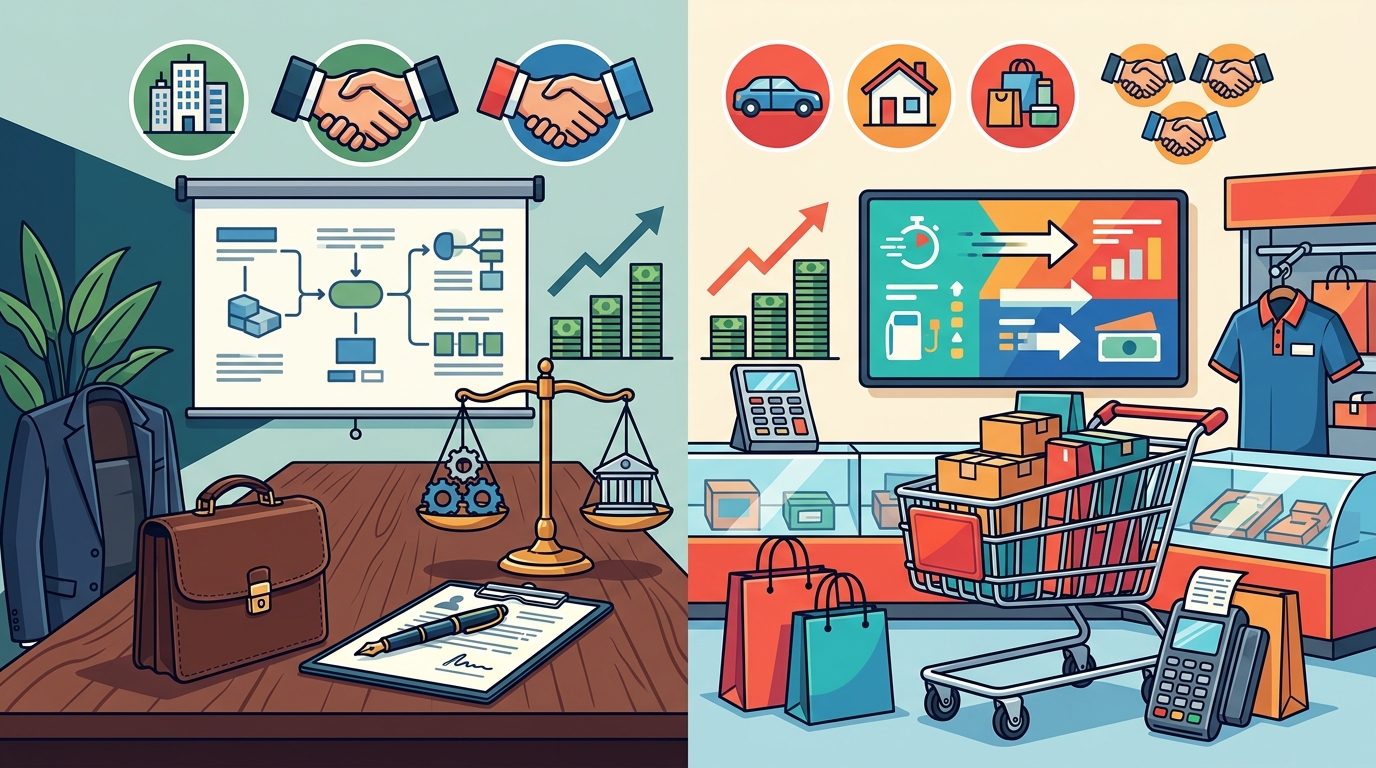
The fundamental divergence between these models lies in the complexity of the buyer journey. B2B transactions involve multiple stakeholders, longer decision timelines, and rigorous justification requirements. In contrast, B2C transactions are often individual, immediate, and driven by emotional triggers.
Research indicates that the average B2B sales cycle has extended by 20% over the last five years due to increased buyer scrutiny. This necessitates a training approach that emphasizes patience, strategic planning, and relationship building. Conversely, B2C sales rely on rapid conversion tactics and brand affinity. The volume of interactions in B2C is significantly higher, requiring agents to master quick rapport-building and objection handling at scale.
Impel Dynamic specializes in navigating these complexities. Our sales training courses are designed to address these specific operational realities. Whether your team needs to close enterprise deals or manage high-volume customer interactions, the underlying skills must be tailored to the context.
B2B Sales Training Methodologies
B2B sales training is rooted in consultative selling. The goal is to transform salespeople into trusted advisors who can diagnose complex business problems and prescribe tailored solutions. This requires deep product knowledge and industry expertise.
Strategic Account Planning
Effective B2B training emphasizes strategic account planning. Sales professionals must learn to map organizational charts, identify key decision-makers, and understand the financial drivers of their clients. This process is not linear. It requires continuous adaptation as client needs evolve.
Our bespoke sales programmes focus on these exact competencies. We help teams develop the ability to navigate complex procurement processes and secure buy-in from C-suite executives. This approach ensures that every interaction moves the deal forward strategically.
Negotiation and Value Proposition
In the B2B realm, price is rarely the primary driver. Value is. Training must equip teams to articulate the return on investment (ROI) of their solutions. This involves quantifying benefits, mitigating risk, and demonstrating long-term partnership potential. Negotiation skills in this context are about finding mutually beneficial outcomes rather than simply lowering prices.
According to data from leading business journals, companies that train their teams in value-based selling see a 15% increase in deal size. This highlights the importance of moving beyond feature-dumping and focusing on business impact.
B2C Sales Training Methodologies
B2C sales training focuses on efficiency, emotional intelligence, and volume. The sales cycle is short, often concluding in a single interaction. Therefore, training must emphasize quick decision-making and persuasive communication.
Emotional Engagement and Brand Loyalty
B2C buyers are often driven by personal needs, desires, and fears. Training must teach agents how to connect emotionally with customers quickly. This involves active listening, empathy, and the ability to tailor the pitch to individual preferences. Brand loyalty is built through consistent, positive experiences.
Our leadership training programs help managers foster a culture of customer-centricity. Leaders are trained to coach their teams on reading emotional cues and responding appropriately. This creates a seamless customer journey that encourages repeat business.
High-Volume Efficiency
Efficiency is paramount in B2C. Agents must handle numerous inquiries daily without sacrificing quality. Training includes techniques for rapid objection handling, upselling, and cross-selling. The focus is on maximizing the lifetime value of each customer through strategic engagement.
Studies show that increasing customer retention by just 5% can increase profits by 25% to 95%. This underscores the need for B2C training that goes beyond the initial sale to focus on long-term relationship management.
Comparative Analysis Table
The following table summarizes the key distinctions between B2B and B2C sales training requirements.
| Feature | B2B Sales Training | B2C Sales Training |
|---|---|---|
| Sales Cycle Length | Long (Months to Years) | Short (Minutes to Days) |
| Decision Makers | Multiple Stakeholders | Individual or Household |
| Primary Focus | ROI and Value | Emotion and Price |
| Relationship Type | Partnership-Based | Transactional |
| Training Method | Consultative Selling | High-Volume Efficiency |
Hybrid Sales Models
Many modern businesses operate in a hybrid space, known as B2B2C or prosumer markets. In these scenarios, the buyer is an individual but makes purchases on behalf of a business or for professional use. This blurs the lines between the two models.
Training for hybrid models must combine the strategic depth of B2B with the agility of B2C. Sales teams need to understand both the emotional drivers of the individual user and the financial constraints of the organization. This requires a flexible mindset and a versatile skill set.
Impel Dynamic offers tailored leadership and management training to help organizations navigate these complex landscapes. We help teams develop the adaptability required to switch between consultative and transactional modes seamlessly.
Key Takeaways
- ROI Impact: Tailored sales training delivers a 6X average ROI, significantly outperforming generic programs.
- Cycle Length: B2B cycles are extending, requiring more strategic account planning and patience.
- Value vs. Emotion: B2B focuses on quantifiable ROI, while B2C relies on emotional engagement and brand loyalty.
- Stakeholder Complexity: B2B sales involve multiple decision-makers, necessitating advanced mapping and influence skills.
- Retention Value: In B2C, a 5% increase in retention can boost profits by up to 95%, highlighting the need for relationship-focused training.
- Hybrid Flexibility: Modern businesses often require hybrid skills, blending strategic depth with transactional agility.
- Expert Guidance: Partnering with specialized providers like Impel Dynamic ensures alignment with industry best practices.
Frequently Asked Questions
What is the primary difference between B2B and B2C sales training?
B2B sales training focuses on complex, long-cycle negotiations with multiple stakeholders, emphasizing ROI and strategic planning. B2C sales training focuses on high-volume, short-cycle transactions driven by emotional engagement and brand loyalty.
Which sales model offers a higher average deal size?
B2B sales typically offer significantly higher deal sizes due to the complexity of the solutions and the number of stakeholders involved. However, B2C sales can generate higher total revenue through volume.
How does Impel Dynamic approach sales training?
Impel Dynamic offers bespoke sales programmes tailored to the specific needs of your organization. We focus on consultative selling, strategic account planning, and leadership development to drive tangible results.
Can a company use both B2B and B2C training strategies?
Yes, many companies operate in hybrid models. In these cases, training must be flexible, combining the strategic depth of B2B with the agility of B2C to address diverse customer needs.
What is the role of leadership in sales training?
Leadership plays a critical role in standardizing sales methodology and coaching teams. Effective leadership training ensures that sales strategies are consistently applied and continuously improved across the organization.
How long does it take to see results from sales training?
Results vary based on the program's intensity and the team's baseline skills. However, our clients often see measurable improvements in behavior and performance within the first few weeks of training.
Is online sales training as effective as in-person training?
Online sales training can be highly effective, especially for reaching distributed teams. However, in-person training often allows for more immersive role-playing and immediate feedback. A blended approach is often optimal.
Next Steps
Ready to transform your sales performance? Whether you need B2B strategic training or B2C efficiency coaching, Impel Dynamic is here to help. Contact us today to book a call and discover how our tailored solutions can drive your business growth.